
For busy readers
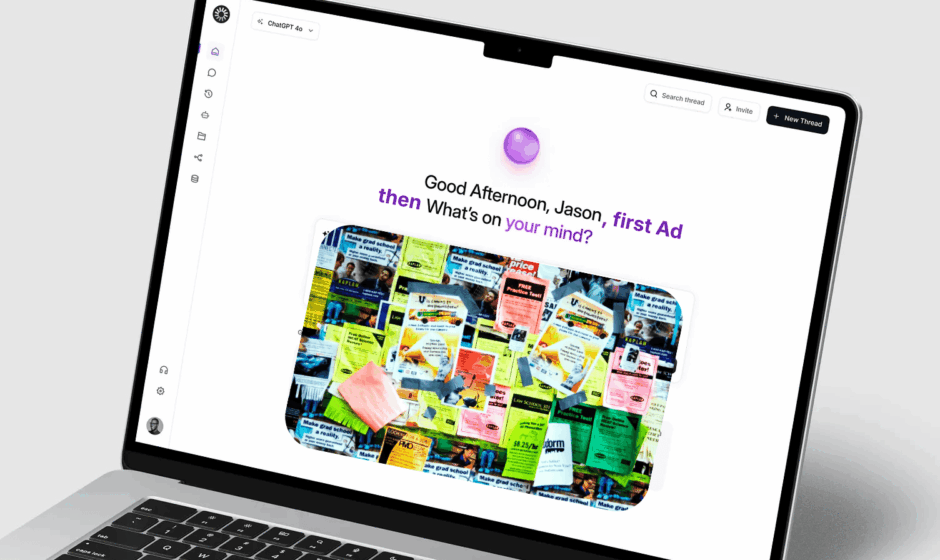
- OpenAI is exploring advertising inside ChatGPT as a long-term revenue lever, not a short-term cash grab
- Ads are likely to appear as contextual, non-intrusive suggestions, not banners or pop-ups
- If this works, every major AI platform will follow, reshaping how the internet monetizes attention
Why OpenAI is even thinking about ads
For a long time, OpenAI took the moral high ground:
subscriptions over ads, usefulness over noise.
ChatGPT Plus, Team, and Enterprise proved that people will pay for AI — but there’s a ceiling to subscriptions.
Now zoom out.
ChatGPT is no longer:
- a productivity tool
- a chatbot
- an experiment
It’s becoming:
- a search alternative
- a writing layer
- a decision assistant
- a daily interface
And interfaces at this scale are expensive.
Running large models costs billions in compute, infrastructure, research, and safety. Subscriptions alone don’t cover:
- free users at massive scale
- global expansion
- new multimodal models
- always-on availability
Ads aren’t about greed here — they’re about sustainability.
This isn’t “Google-style ads” — and OpenAI knows that
If people imagine blinking banners inside ChatGPT, they’re missing the point.
OpenAI understands something critical:
interruptive ads would break trust instantly.
So if ads arrive, they’ll likely look very different.
Think:
- “Sponsored suggestions” inside answers
- clearly labeled recommendations
- context-aware placements tied to intent
- optional, dismissible, non-disruptive
For example:
- asking about travel → a clearly marked flight or hotel suggestion
- asking about software → a sponsored tool recommendation
- asking about learning → promoted courses
Not ads yelling at you.
Ads whispering when relevant.
Why ChatGPT is uniquely positioned for ads (and why that’s risky)
Unlike search engines, ChatGPT doesn’t just know what you typed — it knows what you mean.
That’s powerful. And dangerous.
ChatGPT understands:
- intent
- context
- follow-ups
- emotional tone
This makes ad targeting more accurate than anything before — but it also raises serious questions:
- Where does help end and influence begin?
- How transparent does OpenAI need to be?
- Can users trust answers that may include paid placement?
This is the tightrope OpenAI has to walk.
Why OpenAI is moving now
Timing matters.
Three things are happening simultaneously:
1. AI usage is flattening into habit
ChatGPT isn’t spiky usage anymore. It’s routine. And routine usage supports ad economics.
2. Competition is closing in
Google, Microsoft, Meta, Perplexity — everyone is turning AI into interfaces. If OpenAI doesn’t experiment, others will define the rules.
3. Investors expect a scalable model
OpenAI is no longer just a research lab. It’s a company with:
- massive capital commitments
- long-term infrastructure deals
- enterprise obligations
Ads are a lever Wall Street understands.
Will other AI platforms do the same?
Almost certainly.
Once one conversational AI cracks non-annoying monetization, it becomes the default.
Expect:
- Google Gemini to integrate deeper ad logic (inevitable)
- Perplexity to expand sponsored answers
- smaller AI tools to adopt affiliate-style prompts
- enterprise AIs to offer “recommended vendors”
The difference will be how honest they are about it.
How users will actually react (the honest take)
There will be outrage.
Then normalization.
Users will split into three groups:
?? Power users
They’ll pay to avoid ads — happily.
? Casual users
They’ll tolerate ads if they’re useful and unobtrusive.
? Purists
They’ll complain loudly — and then keep using it anyway.
The line OpenAI can’t cross is deception.
As long as ads are clearly labeled, trust survives.
The bigger shift nobody is saying out loud
This move signals something deeper:
AI is replacing the web interface itself.
If ChatGPT becomes where people:
- search
- decide
- compare
- learn
Then ads don’t belong on websites anymore.
They belong inside answers.
That’s a structural change to the internet.
What OpenAI must get right
If ads come to ChatGPT, a few rules are non-negotiable:
- absolute transparency
- no manipulation of factual answers
- no pay-to-win reasoning
- user control over ad exposure
- a clear premium, ad-free tier
Break any of these, and the backlash will be real — and justified.
Strategic insight
OpenAI bringing ads to ChatGPT doesn’t mean it’s selling out.
It means ChatGPT has grown up.
Every major interface in history eventually faced the same question:
who pays for it at scale?
This is OpenAI’s attempt to answer that — carefully.
ChatGPT’s Monetization Moment
If ads do come to ChatGPT, the real test won’t be whether users see them.
It’ll be whether users still trust the answers underneath.
And that’s a harder problem than monetization ever was.