 user
userOpenAI’s $122B Moment: The Funding Round That May Redefine the Entire AI Economy
OpenAI’s $122B valuation signals a massive shift in AI power. Here’s what it means for cloud computing, startups, and the future of the AI economy.

OpenAI’s $122B valuation signals a massive shift in AI power. Here’s what it means for cloud computing, startups, and the future of the AI economy.
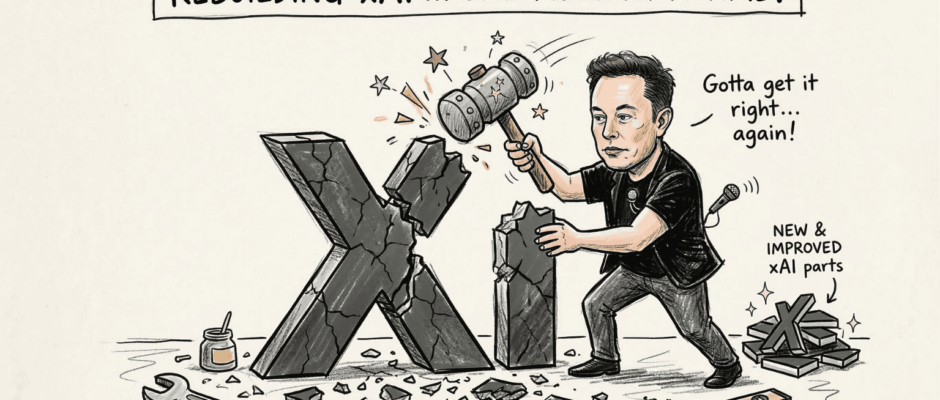
Elon Musk built xAI to compete with the biggest names in artificial intelligence. But internal turmoil, weak product traction, and stronger competitors forced a reset. Now Musk is attempting something rare in tech: rebuilding an AI company while the race is already in full speed.
For years, Nvidia has been the silent power behind the world’s most famous AI models. But now the company is quietly stepping back from deeper financial ties with the creators of ChatGPT and Claude — a move that could reshape the balance of power in the AI industry.
Silicon Valley’s AI race has largely played out in research labs and product launches.
Now it has entered the courtroom — and the first major legal victory has gone to xAI.
OpenAI bringing ads to ChatGPT sounds almost ironic — the AI that promised clarity without clutter now considering the oldest internet business model. But this isn’t a desperate move or a betrayal of users. It’s a signal that conversational AI has crossed from experiment to infrastructure — and infrastructure eventually needs to pay for itself.
AI search startup Perplexity has signed a massive $750 million cloud computing agreement with Microsoft, a three-year pact that could reshape how AI companies choose their infrastructure and where frontier models live. But beyond the dollar figure, this deal reflects a broader shift in the AI ecosystem — one where flexibility, multi-cloud strategies, and competitive positioning matter as much as raw compute capacity.
OpenAI’s Sora app exploded onto the scene with record-breaking downloads and hype — but months later, that momentum is fading fast. Amid declining usage, increasing competition from rivals like Google Gemini and Meta’s Vibes, and mounting copyright and content concerns, Sora’s future looks far more uncertain than its meteoric debut suggested.
OpenAI’s Prism is a new AI workspace crafted for scientific research, offering persistent context, data integration, and iterative reasoning tailored to domain workflows. It signals a shift toward AI that doesn’t just answer questions — remembers context and enriches inquiry.


 thebohemianbliss