
For Busy Readers
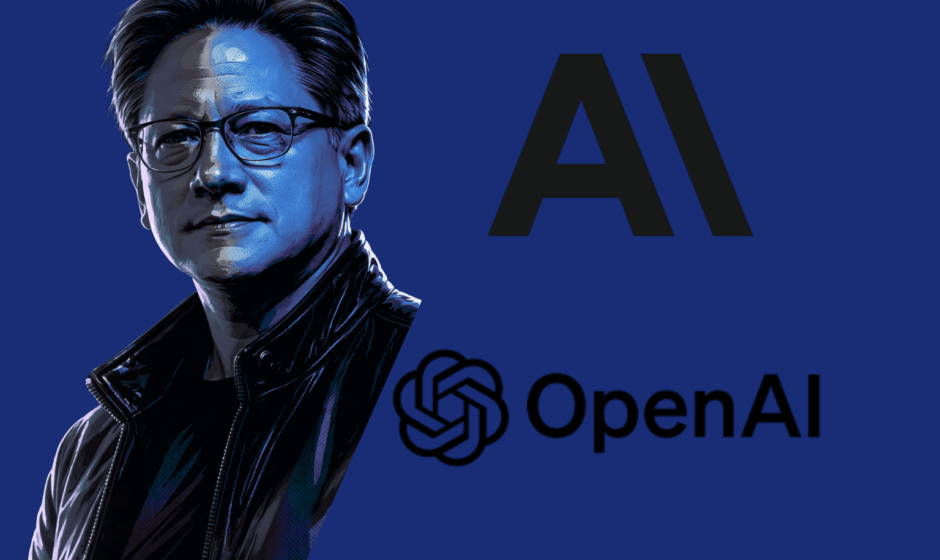
- Nvidia CEO Jensen Huang says the company will not make further investments in OpenAI or Anthropic, the companies behind ChatGPT and Claude.
- Nvidia still supplies the GPUs powering their AI models, but its role as an investor is likely ending as both companies move toward potential IPOs.
- The shift reflects a broader strategic realignment in the AI ecosystem, where chip suppliers, model developers, and cloud providers are redefining their relationships.
The Announcement That Shook the AI Ecosystem
At a recent Morgan Stanley Technology, Media and Telecom conference in San Francisco, Nvidia CEO Jensen Huang revealed a notable shift: the company will likely stop making additional investments in OpenAI and Anthropic, two of the most influential AI labs in the world.
The decision effectively signals Nvidia stepping back financially from the companies behind ChatGPT and Claude, even though its chips remain the backbone of their AI infrastructure.
Huang’s explanation was straightforward. As both AI companies approach potential public listings, Nvidia believes the window for strategic private investments is closing.
In other words: Nvidia wants to remain the infrastructure provider — not a long-term shareholder.
A Complicated Relationship with the AI Labs
The move comes after years of increasingly complex relationships between Nvidia and the companies building frontier AI systems.
Nvidia has already invested billions into the ecosystem and supplies the GPUs used to train and run large language models such as ChatGPT and Claude.
However, those same companies have also begun exploring alternatives to Nvidia hardware.
Reports earlier this year suggested that OpenAI has evaluated other chip providers and architectures to reduce reliance on Nvidia GPUs, particularly for AI inference workloads.
At the same time, major tech companies are investing billions into custom AI chips, further threatening Nvidia’s long-term monopoly in AI computing.
This dynamic creates a strange reality: Nvidia powers the AI revolution, but the companies driving it are increasingly trying to escape dependence on Nvidia hardware.
The Shadow of the $100 Billion AI Deal
The pullback also follows months of uncertainty around a massive funding partnership between Nvidia and OpenAI.
Earlier plans suggested Nvidia could participate in a huge investment round valued at up to $100 billion, but Huang recently indicated that such a deal is unlikely to happen.
Instead, Nvidia appears to be shifting toward a more neutral role — selling chips and infrastructure across the entire AI industry rather than backing specific model companies.
This strategy reduces potential conflicts of interest with Nvidia’s other customers, including Microsoft, Google, Meta, and Amazon — all of whom are competing to build their own frontier AI systems.
Why Nvidia Might Be Repositioning
Several strategic motivations likely sit behind Nvidia’s decision.
1. Avoid picking winners in the AI race
If Nvidia invests too heavily in one AI company, it risks alienating others who rely on its GPUs.
2. Protect its core business
Nvidia’s biggest opportunity is selling AI hardware to everyone — not betting on a single AI lab.
3. The AI ecosystem is fragmenting
Companies are developing custom silicon, building proprietary models, and vertically integrating their stacks.
Remaining neutral keeps Nvidia in the center of this ecosystem.
What This Means for the Future of AI
Nvidia stepping back from deeper financial involvement with OpenAI and Anthropic signals something larger: the AI industry is entering a new phase.
In the early years of generative AI, chipmakers, cloud providers, and model labs were tightly intertwined.
Now those relationships are shifting.
AI companies want independence.
Cloud providers want their own chips.
And Nvidia wants to remain the indispensable supplier to everyone.
The result could be a more competitive — and far more fragmented — AI landscape.