
 thebohemianbliss
How Arcee AI Built an LLM That Punches Above Its Weight — Without Playing Big Tech’s Money Game
How Arcee AI Built an LLM That Punches Above Its Weight — Without Playing Big Tech’s Money Game

How Arcee AI Built an LLM That Punches Above Its Weight — Without Playing Big Tech’s Money Game
When Handshake — once known primarily as a college career network — pivoted into AI data labeling, few in the broader tech world paid much attention. But its recent acquisition of Cleanlab, a renowned data quality and auditing startup, signals something bigger: a strategic tilt toward data quality leadership in the rapidly maturing AI infrastructure market. This deal isn’t just about growth — it’s about shaping how the next generation of AI models are trained and trusted.
When NVIDIA introduced Nemotron-3, it didn’t arrive with the consumer buzz of a chatbot or the spectacle of a viral demo. And that’s precisely why its real story began after launch. Two months on, Nemotron-3 isn’t chasing headlines — it’s quietly becoming infrastructure.
A fresh contender has entered the AI arena with a big, bold idea: forget the brute-force, GPU-maxed approach that dominates today’s generative-AI battles and focus instead on smarter, more efficient models. The startup Flapping Airplanes has just raised a hefty seed round and is positioning itself as a research-first alternative that could shake up how AI is built and scaled.
OpenAI’s Sora app exploded onto the scene with record-breaking downloads and hype — but months later, that momentum is fading fast. Amid declining usage, increasing competition from rivals like Google Gemini and Meta’s Vibes, and mounting copyright and content concerns, Sora’s future looks far more uncertain than its meteoric debut suggested.
Apple has quietly made one of its biggest moves in years by acquiring Israeli AI startup Q.ai, a company that builds tech capable of interpreting whispered words and subtle facial cues. It’s not just another buy — it’s a strategic bet on the future of human-machine interaction.
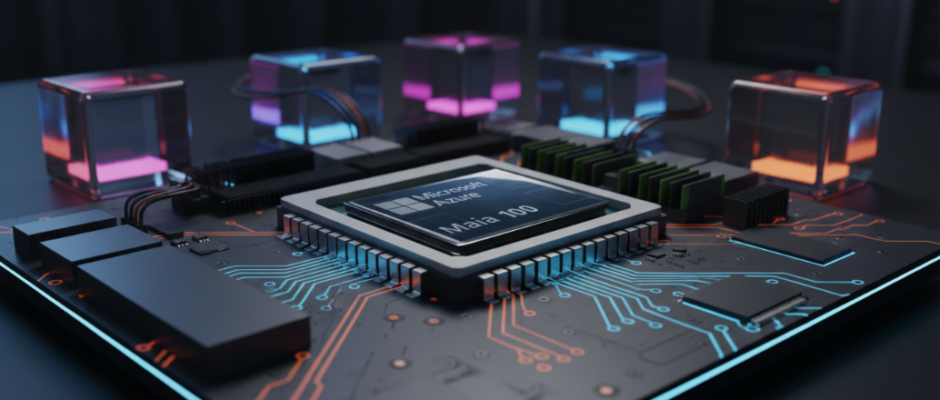
Microsoft is building its own chips now—but not for your laptop, and not to replace NVIDIA overnight. Maia is Microsoft’s custom AI accelerator, designed for the invisible work that powers modern AI: responding, predicting, and scaling intelligence quietly behind the scenes.
Not all robots are built for factories or battlefields. Some are learning to walk among us—quietly, politely, and intelligently. Fauna robotics is about designing machines that don’t just operate around humans, but behave like they belong in human environments.
X is no longer just scrolling, posting, and reacting. With Elon Musk pushing a new image-labeling system on the platform, everyday users are quietly becoming part of one of the largest real-world AI training loops ever built. Every label, every correction, every context added to an image feeds a bigger goal: teaching AI how humans actually see the world.
Chrome is transforming from a traditional browser into an AI-powered companion—one that can not only answer questions but also act on your behalf. With tighter Google Gemini integration and new “agentic” autonomous features, Chrome is taking the fight to emerging AI-first browsers and setting a new standard for web productivity in 2026.

 Sunil Menaria

 Shweta Nagda