
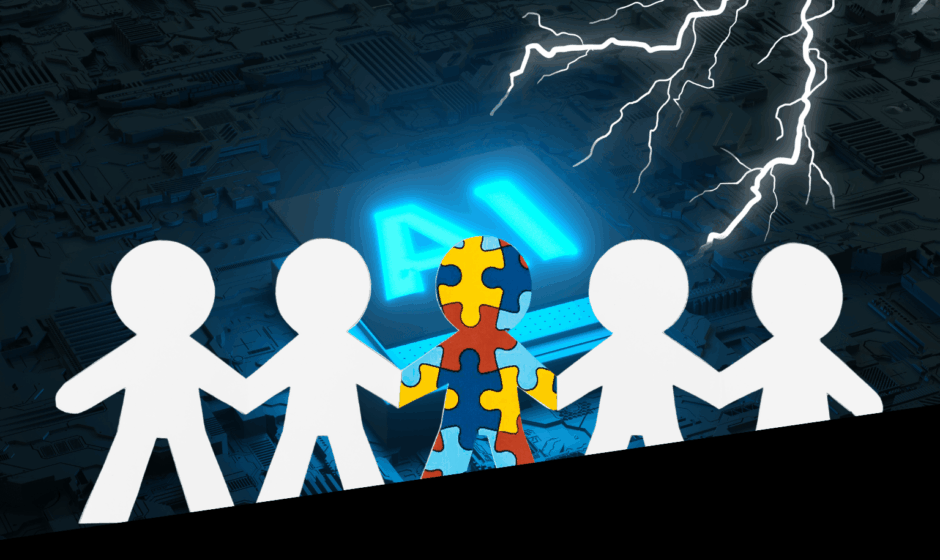

Why multiple AI firms quietly backing Anthropic could become the defining moment for global AI independence.
For busy readers
- Multiple AI firms are signalling support for Anthropic’s stance on limiting unrestricted intelligence access to frontier models.
- The moment marks the first visible alignment among AI companies on autonomy, privacy and control.
- How governments respond could determine whether AI remains privately led — or becomes state-directed infrastructure.
The moment the AI industry stopped competing — and started aligning
In two decades of covering technology and national-security intersections, industry unity against intelligence pressure is rare.
Tech companies compete relentlessly.
They almost never align publicly unless the stakes are structural.
That’s what makes the recent wave of support for Anthropic notable.
While not always expressed through formal statements, several frontier AI firms and infrastructure players are signalling — through policy positioning, closed-door discussions and public commentary — that unrestricted intelligence access to private AI systems crosses a line.
This is not simply about Anthropic.
It is about precedent.
If one frontier AI company is compelled to provide unrestricted model access, deep internal transparency or guardrail removal, others know they will be next.
And once that precedent is set, it rarely reverses.
Why AI companies supporting Anthropic makes strategic sense
1. Protecting the autonomy of frontier labs
AI firms today operate at the edge of technological capability.
Their models represent:
- billions in research investment
- proprietary safety systems
- competitive differentiation
- long-term enterprise value
Allowing intelligence agencies deep operational control or unrestricted access could compromise that independence.
By supporting Anthropic’s stance, other AI companies are effectively protecting their own future negotiating power.
This is less about solidarity and more about structural self-preservation.
2. Preventing global precedent risk
AI companies operate globally — not just in the United States.
If one government establishes broad access rights, other governments will inevitably demand equivalent treatment.
That could mean:
- data and model access requests across jurisdictions
- pressure from multiple intelligence ecosystems
- fragmented compliance requirements
- reputational risks in international markets
A unified stance now helps prevent a future where AI companies face simultaneous pressure from multiple states.
3. Maintaining commercial neutrality
Enterprise clients — particularly multinational firms — prefer AI providers perceived as neutral infrastructure.
If frontier models are seen as extensions of intelligence agencies, adoption in sectors like:
- finance
- healthcare
- legal
- global enterprise SaaS
could slow dramatically.
Supporting boundaries between intelligence operations and commercial AI helps maintain trust.
Why this is good for consumers and the public
Privacy preservation
If AI firms resist unrestricted surveillance or intelligence integration into commercial models, users gain a stronger layer of privacy protection.
The alternative — deeply integrated intelligence access into mainstream AI tools — raises significant civil-liberty concerns globally.
Safer AI deployment
Independent AI companies are more likely to maintain:
- safety guardrails
- bias checks
- misuse restrictions
- ethical deployment standards
If models become extensions of intelligence operations, those priorities could shift toward operational efficiency over user safety.
Greater innovation
An independent AI ecosystem encourages:
- competition
- diverse model development
- open research
- global collaboration
Heavy state control historically slows innovation cycles in emerging technologies.
How this could reshape the global AI landscape
A new alignment among frontier labs
The most immediate impact is subtle but important:
AI companies are beginning to see themselves as a collective ecosystem rather than isolated competitors.
This does not mean formal alliances.
But it does signal shared red lines.
Rise of “AI sovereignty” debates
Just as countries discuss digital sovereignty, companies are now asserting technological sovereignty.
Who controls advanced AI?
- Private labs
- Governments
- Hybrid models
This question will define the next decade of policy and investment.
Fragmented AI ecosystems
If tensions escalate, we may see three distinct AI blocs emerge:
- Government-aligned AI systems
- Commercially neutral global AI providers
- Open-source and decentralized AI ecosystems
Each will serve different markets and political environments.
What intelligence agencies must now reconsider
For intelligence agencies, this moment requires recalibration rather than confrontation.
1. Respecting commercial boundaries
Private AI firms are not traditional defence contractors.
They operate globally, serve commercial clients and depend on public trust.
Heavy-handed pressure risks pushing them away from cooperation entirely.
2. Building structured partnership models
Instead of demanding unrestricted access, agencies may need:
- dedicated defence-specific AI models
- controlled deployment frameworks
- transparent legal agreements
- clear ethical boundaries
This approach worked in cloud computing and will likely be necessary for AI.
3. Balancing security with innovation
Excessive control over private AI development could slow domestic innovation and push talent toward more neutral jurisdictions.
National security increasingly depends on maintaining a strong private AI ecosystem.
The long-term future: a defining inflection point
This moment may be remembered as the first time the AI industry collectively defined its relationship with state power.
If companies maintain a unified stance:
- AI remains largely private-sector driven
- Innovation continues at current pace
- Global adoption accelerates
If governments assert stronger control:
- AI could fragment into national ecosystems
- Global deployment may slow
- Trust dynamics may shift dramatically
Either way, the relationship between AI companies and intelligence agencies will never again be informal.
It is becoming one of the most consequential negotiations of the modern technology era.
Closing perspective from CompylORIGINALS Team
In decades of tech journalism, inflection points are rarely obvious in the moment.
This one is.
The quiet alignment of AI companies behind Anthropic is not just corporate positioning.
It is the first coordinated signal that the industry intends to define its own boundaries before governments define them instead.
The next phase of artificial intelligence will not be shaped only by model breakthroughs or funding rounds.
It will be shaped by who controls access, who sets limits, and who ultimately decides how far this technology can go.
For now, the industry has drawn a line.
The world is watching how governments respond.