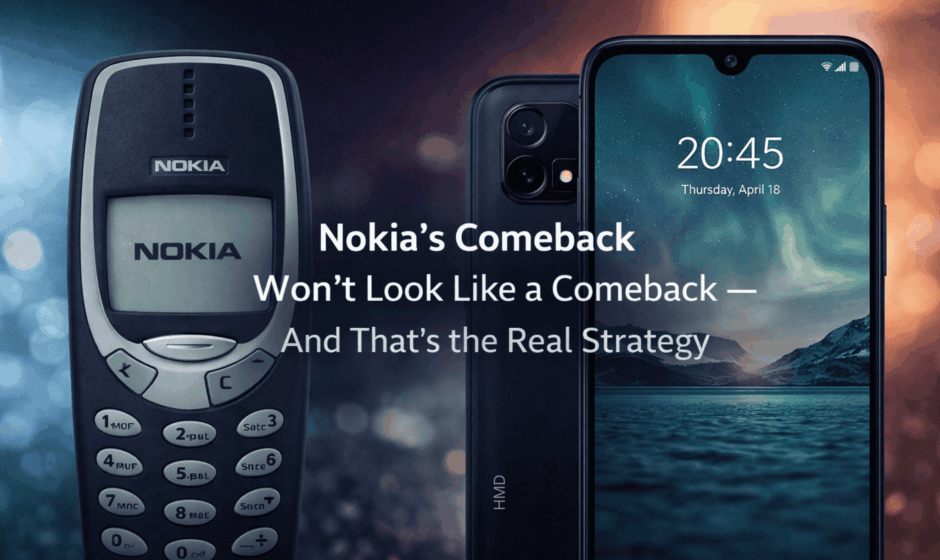

Inside the slow Nokia revival, HMD’s strategy, and what must change if they want to fight Samsung, Apple and Chinese giants again
For busy readers
- HMD (the company behind Nokia phones) is shifting toward its own brand while still using Nokia for feature phones.
- Their strengths: durability, clean Android, affordability, repairability and nostalgia-driven designs.
- Their biggest challenge: perception — competing against Apple, Samsung and Chinese brands requires stronger innovation and branding.
The Nokia revival story: what happened after the fall
To understand where HMD and Nokia stand today, you need context.
After Nokia’s smartphone collapse and Microsoft’s failed Lumia era, HMD Global was formed in 2016 by former Nokia executives to revive the brand.
They secured a licensing agreement to design and sell Nokia-branded phones globally.
The mission: bring Nokia back to relevance in smartphones and feature phones.
For a few years, it worked:
- Clean Android
- Affordable pricing
- Strong durability
- Nostalgic brand recall
But the smartphone market changed rapidly.
Chinese brands scaled fast. Apple dominated premium. Samsung owned mass market.
Nokia slowly faded from mainstream attention again.
Now HMD is entering phase two of revival.
HMD’s current strategy: moving beyond Nokia
HMD is preparing for a future where it may not rely heavily on the Nokia brand.
The licensing agreement with Nokia runs through 2026, and HMD has already begun building its own brand identity.
Why HMD is shifting to its own brand
- Nokia smartphones mostly appealed to older users
- Younger buyers weren’t engaging
- Hard to compete against aggressive Android brands
- Needed a fresh identity to grow globally
So HMD launched a multi-brand strategy:
- Nokia brand → feature phones + nostalgia
- HMD brand → smartphones + future devices
This is not abandoning Nokia — it’s repositioning it.
What HMD and Nokia are doing right
Despite limited hype, HMD has made several smart moves.
1. Owning the feature phone market
Nokia feature phones still sell strongly across:
- India
- Africa
- Southeast Asia
- Parts of Europe
Demand for simple, durable phones remains high.
Nokia feature phones continue to launch regularly and sell well globally.
HMD understands:
Smartphones get attention.
Feature phones bring steady revenue.
2. Nostalgia-led design strategy
HMD has revived iconic models like:
- Nokia 3210
- Classic keypad phones
- Retro-inspired designs
These devices appeal to users wanting simplicity or digital detox.
New models deliberately reference Nokia’s past design language to trigger emotional connection.
Few brands have this level of legacy recall.
3. Repairability and sustainability focus
HMD is pushing:
- Easy repairable phones
- Replaceable parts
- Longer device life
- Sustainability messaging
This differentiates them from most Android manufacturers focused on rapid upgrades.
Repairability and privacy are becoming core selling points in HMD’s positioning.
4. Unique niche devices
HMD isn’t trying to out-spec flagship phones.
Instead, it is experimenting with niche segments:
- Kid-safe smartphones with AI content filtering
- Hybrid feature-smartphones
- Minimalist devices
- Rugged phones
- Affordable 4G connectivity devices
Example:
The HMD Touch 4G hybrid device targets budget users needing basic internet without full smartphone complexity.
This niche-first strategy is intentional.
What HMD is planning now
1. Shift toward HMD-branded smartphones
HMD wants to build its own brand identity separate from Nokia.
Future focus:
- HMD smartphones
- Youth-focused devices
- Modular accessories
- Unique use-case devices
The goal:
Attract younger audiences and new markets.
2. Continue Nokia feature phones
Even as smartphone branding shifts, Nokia feature phones will continue for several years due to strong demand.
This provides stable revenue while HMD builds its own brand.
3. Cloud-phone and hybrid devices
HMD is experimenting with:
- Cloud-powered lightweight phones
- Hybrid feature/smart devices
- Ultra-affordable connectivity devices
These are designed for emerging markets where smartphone cost remains a barrier.
4. Focus on safety and family devices
HMD is also exploring:
- Child-safe smartphones
- AI-powered content filtering
- Family-focused devices
These niche segments are less crowded than flagship smartphone wars.
The biggest problem: perception
HMD’s biggest challenge is not hardware.
It’s perception.
When people think of smartphones today, they think:
- Apple
- Samsung
- Xiaomi
- Vivo
- Huawei
Nokia rarely enters that conversation anymore.
That perception gap is dangerous.
Even if HMD builds good devices,
if consumers don’t consider them — sales remain limited.
What HMD must do to compete globally again
If HMD wants to compete with major brands, several shifts are necessary.
1. Build one standout flagship
HMD hasn’t launched a serious flagship in years.
To regain credibility:
- Launch one globally competitive flagship
- Strong camera
- Premium design
- AI features
- Long software support
Not for volume — for perception.
Apple and Samsung dominate because of halo devices.
2. Stronger marketing and storytelling
Most consumers don’t know what HMD is doing.
They need:
- Clear identity
- Bold campaigns
- Youth-focused branding
- Social media presence
Nokia once had emotional brand power.
It needs modern storytelling again.
3. Focus on 3 clear segments
Instead of trying everything:
Segment 1: Durable & repairable phones
Segment 2: Safe phones for kids/families
Segment 3: Minimalist & digital detox devices
Owning niches is easier than fighting flagships.
4. Strong software differentiation
HMD must go beyond stock Android.
Potential areas:
- AI-powered safety
- Privacy-first OS features
- Long update cycles
- Device longevity
Software is now the biggest differentiator.
5. Expand in emerging markets first
HMD performs better in:
- India
- Africa
- Middle East
- Parts of Europe
Winning these markets first gives scale before chasing US or premium markets.
The road ahead: can Nokia truly return?
Nokia as a brand still has emotional equity.
But the smartphone market is brutal.
HMD’s future depends on whether it can:
- Build a strong independent brand
- Launch one standout device
- Own niche segments
- Modernize marketing
- Deliver long-term reliability
If executed right, Nokia’s revival won’t look like Apple or Samsung.
It will look quieter — slower — but sustainable.
And in today’s smartphone market, that may be the only viable comeback.