

For busy readers
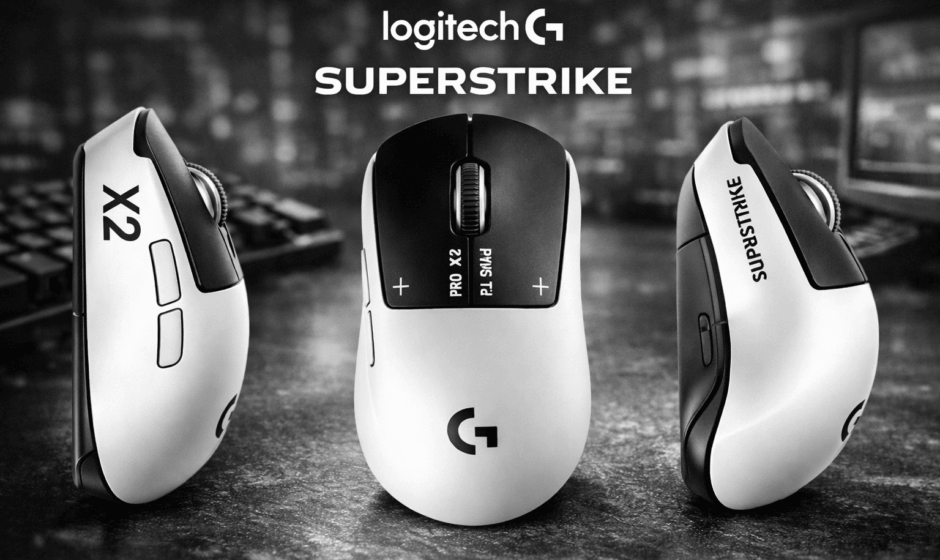
- Logitech’s Superstrike introduces a new click system that replaces traditional mechanical switches
- Designed with pro esports players, it focuses on latency, precision, and customizable response
- Rival brands like Razer, SteelSeries, and others are now under pressure to rethink how gaming mice actually work
A decade in gaming tech — and this feels different
If you’ve spent years reviewing gaming hardware, you start to notice a pattern.
Every new mouse promises:
- better sensor
- lighter weight
- faster polling
- more RGB
But the actual gameplay difference? Often marginal.
The Superstrike is one of the rare launches that doesn’t just upgrade specs — it changes the philosophy of a gaming mouse.
Instead of asking:
“How fast can we track movement?”
Logitech asked:
“How fast can a click exist?”
That question changed everything.
What makes the Superstrike different
At the center of the Superstrike is something Logitech calls the Haptic Inductive Trigger System (HITS).
Traditional gaming mice use mechanical or optical switches.
Superstrike removes them entirely.
Instead, it uses:
- inductive sensing
- adjustable actuation
- real-time haptic feedback
This allows clicks to register faster and reset quicker, with customizable actuation levels and rapid-trigger settings tuned to individual playstyles.
For competitive shooters or high-APM games, that matters more than any RGB strip ever will.
Logitech claims the system can reduce click latency by up to 30 milliseconds, a meaningful difference in esports environments where reaction time decides outcomes.
Designed for pros first — everyone else later
Unlike most gaming peripherals, this mouse wasn’t designed for mass-market appeal first.
It was built alongside more than 100–180 esports professionals across titles like CS2, Valorant, and League of Legends.
That’s important.
When pros test hardware, they aren’t looking for comfort marketing — they’re looking for:
- consistency
- predictability
- fatigue reduction
- microsecond advantages
Superstrike aims to reduce the friction between hand and in-game action — essentially becoming an extension of muscle memory.
Specs that actually matter (and why)
The Superstrike isn’t just a concept piece. It’s built like a top-tier esports tool:
- up to 44,000 DPI sensor
- 8,000Hz polling rate wireless
- customizable click actuation and reset
- ~60g lightweight chassis
- up to 90 hours battery life
- HERO 2 sensor with zero smoothing or filtering
None of this is revolutionary alone.
Together, it creates something extremely consistent.
Consistency wins tournaments.
The bigger shift: clicks are now tunable
For years, keyboards evolved faster than mice.
We saw:
- analog switches
- rapid triggers
- adjustable actuation
Mice remained stuck in mechanical switch logic.
Superstrike changes that.
You can now tune:
- how far a click travels
- how fast it resets
- how strong it feels
It’s essentially bringing keyboard-level customization into mouse clicks.
And once gamers get used to tunable clicks, going back will feel outdated.
How it compares to other top-tier gaming mice
Superstrike isn’t alone in the premium esports mouse space.
Here’s where the competition stands:
Razer DeathAdder V4 Pro
One of the strongest rivals in the esports category, featuring:
- Focus Pro 45K sensor
- 8,000Hz polling
- ultra-light ~56g build
- optical switches for fast response
Razer still relies on refined traditional switch systems — incredibly fast, but not as customizable as inductive systems.
Razer Cobra Pro / Basilisk series
More versatile gaming mice with:
- high DPI sensors
- multiple programmable buttons
- ergonomic builds
- RGB-heavy design
These cater to broader gaming audiences rather than pure esports precision.
Logitech’s own Superlight line
Before Superstrike, the G Pro X Superlight dominated competitive setups due to:
- low weight
- clean symmetrical shape
- reliable sensor performance
Superstrike builds directly on this legacy — same trusted shape, but with next-gen click tech layered underneath.
What this means for competitive gaming
Gaming peripherals evolve in cycles:
- sensors improve
- weight drops
- latency shrinks
But occasionally, a product changes expectations.
Superstrike could push the industry toward:
- analog mouse clicks
- customizable actuation
- haptic-based input
- faster reset cycles
If that happens, the standard mechanical click may start to feel as outdated as rubber-dome keyboards.
Will it change the gaming world overnight?
No.
Will pros adopt it quickly?
Probably.
Will competitors copy the idea within 18–24 months?
Almost certainly.
This is how hardware shifts happen:
- A new input standard appears
- Pros adopt quietly
- Competitive advantage becomes visible
- Industry follows
Superstrike is at stage one.
The real question: is this the future of mice?
After years in gaming tech, one thing is clear:
Players don’t upgrade for aesthetics.
They upgrade for feel.
If adjustable click latency becomes normal, this mouse won’t just be remembered as a good Logitech release.
It’ll be remembered as the moment:
the gaming mouse stopped being a pointer
and became a performance instrument.
Where Logitech Goes From Here
If Superstrike succeeds at the pro level, the ripple effects will be fast.
Expect:
- Razer and SteelSeries exploring similar switch-less tech
- customizable input becoming standard
- esports teams demanding tunable hardware
- gaming mice becoming more like precision instruments
For years, gaming hardware chased speed.
Now it’s chasing control over speed.
And that’s a much harder race to win.