
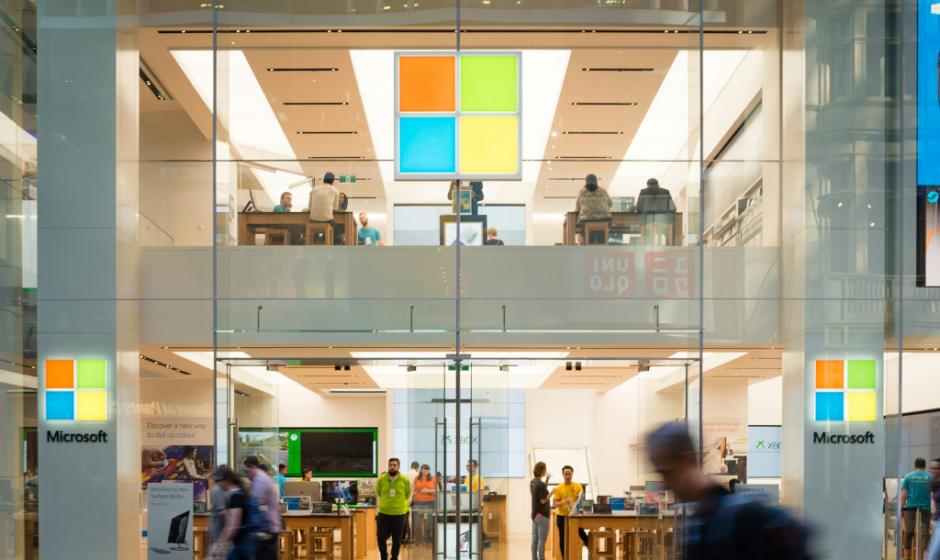

Written from inside the room, not from the audience
I didn’t join Microsoft during its loud years.
I joined when the company had gone quiet.
Not irrelevant — just… heavy.
Successful, profitable, everywhere — yet somehow missing the future it once invented.
This is not the story of a comeback that happened overnight.
It’s the story of a company that unlearned before it rebuilt.
Act I: When Winning Started Feeling Old
In the early 2010s, Microsoft was still winning by every traditional metric:
- Windows dominated desktops
- Office printed money
- Enterprises depended on it
But the industry had shifted.
The world was moving:
- From devices to platforms
- From licenses to subscriptions
- From control to ecosystems
And Microsoft?
It was still protecting castles while the world moved to the cloud.
Inside, it felt like this:
We were everywhere — but not essential.
Act II: The Inflection Point Nobody Applauded
When Satya Nadella became CEO in 2014, there was no dramatic reset button.
No mass firings.
No radical rebrand.
Just a quiet question that changed everything:
“What if our job isn’t to be the center of the universe?”
That question dismantled decades of muscle memory.
Act III: Killing the Ego Before Killing the Code
The first transformation wasn’t technical.
It was cultural.
Microsoft had to:
- Stop treating Windows as the center
- Stop assuming developers would “naturally” choose us
- Stop measuring success by lock-in
We learned to say uncomfortable things out loud:
- Linux wasn’t the enemy
- Open source wasn’t a threat
- iOS and Android weren’t mistakes
They were reality.
And reality doesn’t negotiate.
Act IV: Azure — Built Without Asking for Permission
Microsoft Azure wasn’t born to compete with AWS at first.
It was built to answer a different question:
How do we help developers succeed — even if it doesn’t benefit Windows?
Technically, this meant:
- Designing cloud services that ran anywhere
- Supporting Linux natively
- Letting customers mix competitors freely
- Accepting hybrid architectures as the default
Emotionally, it meant humility.
Azure didn’t grow because it was perfect.
It grew because it listened.
Act V: The Hardest Shift — From Products to Platforms
Old Microsoft shipped:
- Big releases
- Long cycles
- Static software
New Microsoft learned:
- Continuous delivery
- Telemetry-driven decisions
- Cloud-first, not cloud-only
Office stopped being software.
It became a service.
Windows stopped being a destination.
It became a layer.
This wasn’t innovation theatre.
It was operational reinvention.
Act VI: Developers Came Back — Quietly at First
The real signal wasn’t revenue.
It was sentiment.
Developers stopped saying:
“I have to use Microsoft.”
And started saying:
“Microsoft just works with my stack.”
VS Code.
GitHub.
WSL.
Azure DevOps.
None of these succeeded by force.
They succeeded by getting out of the way.
AI Didn’t Save Microsoft — Readiness Did
When AI exploded, Microsoft didn’t panic.
Why?
Because:
- Cloud infrastructure was already scaled
- Data pipelines already existed
- Enterprise trust was already earned
AI didn’t create Microsoft’s comeback.
It rewarded it.
You can’t bolt intelligence onto insecurity.
You can only amplify what’s already stable.
Act VIII: What Changed — Technically and Philosophically
Microsoft stopped asking:
“How do we win?”
And started asking:
“How do we stay relevant for the next 10 years?”
That shift led to:
- Platform neutrality
- Long-term bets
- Fewer flashy launches
- More durable systems
This is boring on stage.
And unstoppable in reality.
The Real Comeback Was Invisible
Microsoft didn’t come back by being louder.
It came back by being:
- Calmer
- More open
- More patient
- Less defensive
From the inside, the biggest change wasn’t what we built.
It was who we stopped trying to be.
The Line Between the Lines
Great companies don’t survive by defending their past.
They survive by making peace with it — and then quietly building the future anyway.
In short
“Microsoft didn’t reboot itself — it finally stopped pressing Ctrl + Alt + Del on the future.”