


In a world where technology evolves faster than job descriptions, engineers must continually upskill to stay relevant and command higher pay. Across industries — whether you work in software, mechanical, electrical, or systems engineering — the skills that matter today will shape your career tomorrow. This blog explores the most critical skills engineers should learn in the next year, why they matter, and how different experience levels can approach them. We’ve also included recommended tools and a clear learning timeline so you can plan your growth strategically.
Why This Matters Now
Engineering doesn’t look the way it used to—and it won’t again. AI, automation, cloud-native platforms, cybersecurity, data, and system integration are quietly reshaping how engineers work every day. What once felt optional or specialized has become essential. Today’s engineers aren’t just expected to build things; they’re expected to understand how intelligent, connected systems behave in the real world.
Core Skills Engineers Should Learn in 2026
Here’s a curated list of in-demand skills engineers should focus on in the next 12 months:
1. AI & Machine Learning Integration
AI isn’t just for data scientists — engineers increasingly apply AI for automation, optimization, predictive maintenance, and decision support.
Key Sub-Skills & Tools
- AI fundamentals & model usage
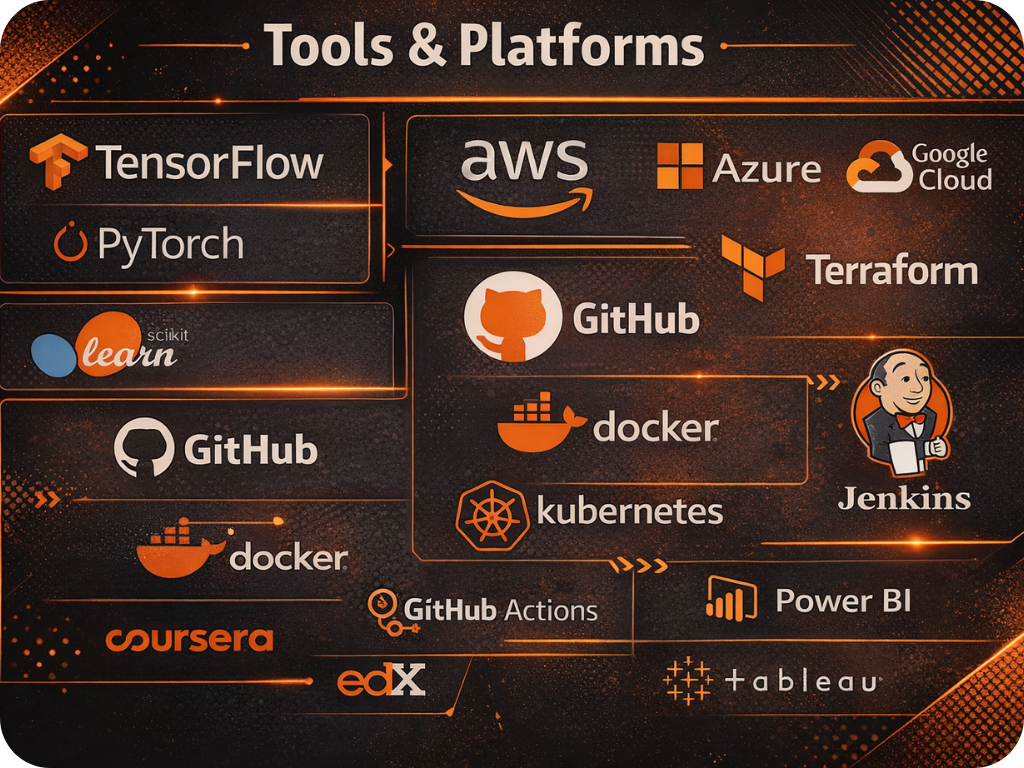
- ML frameworks: TensorFlow, PyTorch, scikit-learn
- Large-Language-Model engineering basics
- Python (primary language)
Why it matters: AI is reshaping product design, decision systems, and automation across all engineering fields.
2. Cloud Engineering & Deployment
The cloud is now the baseline. If you’re an engineer, understanding how systems operate, scale, and integrate in cloud environments isn’t optional—it’s part of the job.
Key Tools & Platforms
- AWS, Azure, GCP (pick one to start)
- Kubernetes & Docker
- Terraform / Infrastructure as Code
3. Cybersecurity & Secure Engineering
Security is now foundational. As systems become more connected, designing with security in mind isn’t optional—it’s part of the job.
Skills & Tools
- Secure coding (OWASP Top 10)
- Network security fundamentals
- Identity Management/Authentication
- Tools like Burp Suite, Wireshark
4. Data Analytics & Visualization
Collecting data is easy. Knowing how to interpret it, visualize it, and use it well is what sets engineers apart.
Key Skills & Tools
- SQL & Python libraries (Pandas, NumPy)
- BI tools: Power BI, Tableau
- Statistical foundations
5. DevOps & Automation
DevOps isn’t just about tools. It’s about building systems that move faster, break less, and improve continuously.
Key Tools
- CI/CD: GitHub Actions, Jenkins, GitLab
- Monitoring: Prometheus, Grafana
- SRE fundamentals
6. Systems thinking & Integration
As systems grow more complex, systems thinking allows engineers to connect mechanical, electrical, and digital pieces into solutions that actually work in the real world.
7. Soft Skills That Multiply Impact
Technical skills may get you hired, but communication, collaboration, and problem-solving are what help you grow, lead, and stay relevant.
Career Stage Guides
A) Just Graduated / Entry Level
Your focus: Build fundamentals and practical exposure.
Priorities:
- Python & Data fundamentals
- Cloud basics (pick AWS or Azure)
- Git & version control
- Intro to AI and ML concepts
Timeline: ~3–6 months per area
? Start working on projects as soon as you get a job — real experience accelerates learning.
B) 2–5 Years Experience
Your focus: Turn foundational knowledge into expertise and specialization.
Priorities:
- Deep dive into Cloud & DevOps workflows
- AI/ML applied engineering
- Secure engineering practices in real systems
- Data analytics in enterprise contexts
Timeline: 6–9 months for each core skill set
? At this stage, certifications (AWS Solutions Architect, Azure, Google Cloud) help boost salary and employer trust.
C) 8–10+ Years Experience (Senior / Lead)
Your focus: Strategic technical leadership and systems architecture.
Priorities:
- AI integration in product and system architectures
- Cloud‐native design and migration leadership
- Cybersecurity strategy & compliance
- Mentor others and lead cross-disciplinary teams
Timeline: Continuous learning — aim for quarterly upskilling goals.
? Senior engineers should pair deep tech with team leadership, communication, and vision.
Skill Learning Roadmap (Visual Guide)
To make this roadmap easier to follow, we’ve created a visual guide showing which skills to focus on over the next 12 months, tailored to your career stage — from fresh graduates to senior engineers. The infographic below aligns each skill with suggested learning platforms, tools, and timelines, making it simple to plan your upskilling journey:
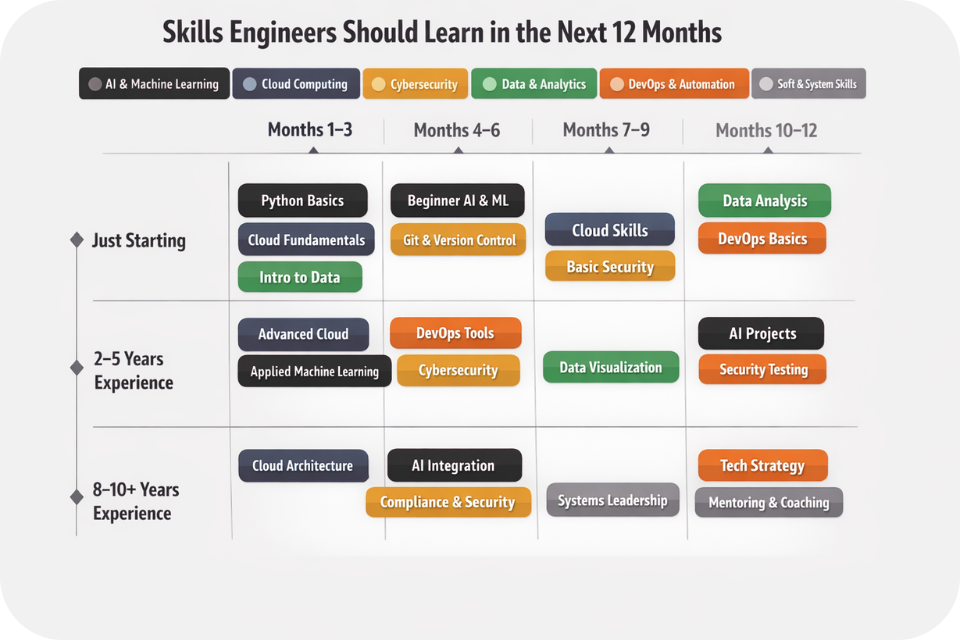
Start with Data & Cloud fundamentals, then expand into AI, DevOps, Cyber, and Systems thinking.
Suggested Learning Tools & Platforms
Technical Tools
- AI/ML: TensorFlow, PyTorch, scikit-learn
- Cloud: AWS, Azure, GCP
- DevOps: Docker, Kubernetes, Jenkins, GitHub Actions
- Data: SQL, Power BI, Tableau
Learning Platforms
- Coursera, edX (certifications & guided tracks)
- AWS/Azure/GCP official training
- Hands-on labs (Qwiklabs, GitHub Projects)
- YouTube & community forums for real world guidance
After all, science is about knowing… and engineering is about doing — which basically means we’re the ones who actually make the coffee machine work when the manual says it’s ‘self-explanatory’!
“Science is about knowing, engineering is about doing.”
Henry Petroski