
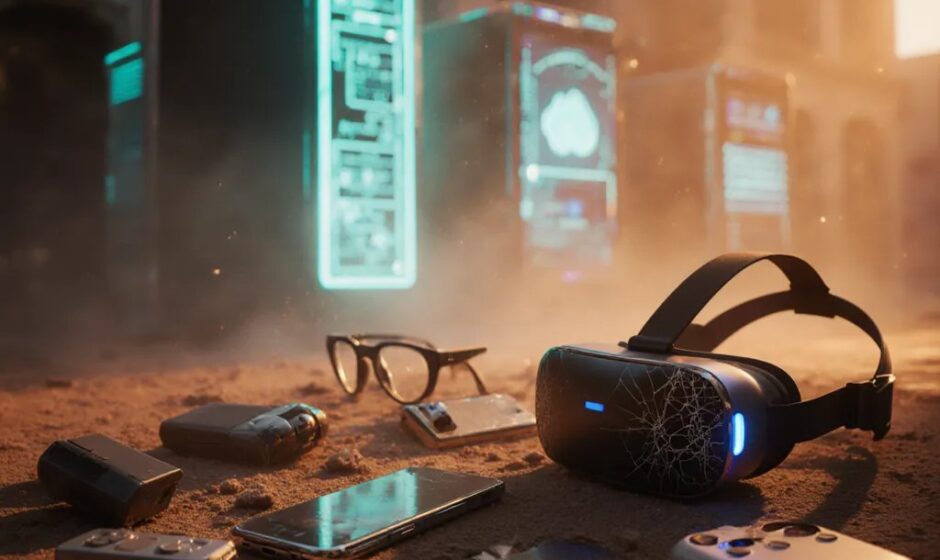

Tech loves success stories—the iPhone moments, the Netflix pivots, the overnight unicorns. But the industry often learns just as much, if not more, from its failures.
Some products took years to build, attracted billions in funding, and were hyped as the future—only to collapse spectacularly. Not because the technology failed, but because people didn’t want them, didn’t trust them, or simply didn’t understand them.
This article looks at 10 tech products that failed badly—how long they took to build, how quickly they unraveled, what replaced them, and the lessons they left behind.
1. Google Glass (2013)
Time to build: ~2–3 years
Time to fail: ~18 months
What people thought:
“Why is that guy staring at me like a robot?”
Glass wasn’t ugly tech — it was socially awkward tech. People feared being recorded. Wearers were mocked as “Glassholes.” The product screamed beta but was priced like luxury.
What replaced it:
Smartphones + discreet wearables (smartwatches, AR for enterprises)
“Google is bringing smart glasses back around 2026 — but this isn’t a reboot of Google Glass. This time, the hardware is discreet, AI-driven, and built around real use cases like translation and assistance, not experimentation.”
Lesson:
If people feel uncomfortable around your product, no amount of innovation can save it.

2. Windows Phone (2010–2017)
Time to build: ~3 years
Time to fail: ~7 years (slow death)
What people thought:
“Looks nice… but where are the apps?”
Windows Phone wasn’t bad — it was late. Developers ignored it. Users didn’t want a phone that felt like a compromise.
What replaced it:
Android and iOS dominance
Lesson:
A great interface means nothing without a strong ecosystem.

3. Amazon Fire Phone (2014)
Time to build: ~4 years
Time to fail: ~1 year
What people thought:
“Why would I buy this over an iPhone?”
Amazon built a phone around Amazon, not users. Locked ecosystem. Gimmicky 3D features. High price. Zero excitement.
What replaced it:
Amazon doubled down on Alexa and Echo devices
Lesson:
Brand power doesn’t automatically translate into product success.

4. Juicero (2016)
Time to build: ~5 years
Time to fail: ~16 months
What people thought:
“Why does my juice need Wi-Fi?”
A $400 juicer that squeezed juice packs — which could be squeezed by hand. Once the internet figured that out, it was over.
What replaced it:
Normal juicers. Common sense.
Lesson:
If your product solves a problem that doesn’t exist, the internet will expose it.

5. Samsung Galaxy Note 7 (2016)
Time to build: ~2 years
Time to fail: ~2 months
What people thought:
“Is this thing going to explode?”
Rushed batteries, poor quality control, global recalls. The phone worked — until it didn’t. Trust vanished instantly.
What replaced it:
Samsung Note 8 (with aggressive safety messaging)
Lesson:
Hardware failure destroys trust faster than any bad feature.

6. Quibi (2020)
Time to build: ~2 years
Time to fail: ~6 months
What people thought:
“Why would I pay for short videos?”
Quibi misunderstood consumer behavior. TikTok was free. YouTube existed. COVID killed commuting — Quibi’s core use case.
What replaced it:
TikTok, Instagram Reels, YouTube Shorts
Lesson:
Timing matters as much as technology.

7. Segway (2001)
Time to build: ~10 years
Time to fail: ~5–6 years (hype collapse)
What people thought:
“Cool… but where do I actually use this?”
Too expensive. Too weird. Too regulated. Cities didn’t adapt to it.
What replaced it:
E-scooters, bikes, micromobility
Lesson:
Infrastructure adoption matters as much as product design.

8. MySpace (2003–2009)
Time to build: ~1 year
Time to fail: ~4 years
What people thought:
“Too messy. Too spammy. Too loud.”
MySpace became chaotic. Facebook felt clean, private, and controlled.
What replaced it:
Facebook, then Instagram
Lesson:
Simplicity scales better than customization chaos.

9. Microsoft Zune (2006)
Time to build: ~3 years
Time to fail: ~5 years
What people thought:
“Why not just buy an iPod?”
Zune wasn’t bad — it was forgettable. No emotional pull. No cultural moment.
What replaced it:
iPod → smartphones
Lesson:
People buy experiences, not specifications.

10. Betamax (1975)
Time to build: ~5 years
Time to fail: ~10 years (market loss)
What people thought:
“VHS just works better for us.”
Betamax had better quality — but shorter recording time and restrictive licensing killed it.
What replaced it:
VHS → DVDs → Streaming
Lesson:
The best technology doesn’t always win — the most practical one does.

What All These Failures Have in Common
Across decades and industries, the pattern is clear:
- ❌ Building for hype instead of humans
- ❌ Ignoring ecosystems and behavior
- ❌ Overengineering simple problems
- ❌ Being right… too early or too late
“In tech, failure doesn’t mean the idea was wrong — it often means the timing was.”
Why Some High-Profile Products Don’t Make This List (Yet)
It’s tempting to label every struggling or controversial tech product a failure. But there’s an important distinction between products that failed and products that are still evolving.
Some well-known names — like Ray-Ban Meta Smart Glasses, Meta Horizon Worlds, Apple Vision Pro, and Tesla Full Self-Driving — often face criticism, skepticism, or even ridicule. Yet they don’t belong on a list of outright failures.
Here’s why:
1. They Haven’t Been Abandoned
Every product in this article was either officially shut down or strategically replaced. In contrast, these platforms are still being actively developed, funded, and iterated on — a clear sign that their creators see long-term value, not dead ends.
2. They’re Long-Term Bets, Not Instant Products
The metaverse, mixed reality, and autonomous driving are not problems that resolve in a single product cycle. They require new hardware, behavior shifts, regulatory clarity, and infrastructure — timelines measured in decades, not quarters.
3. Early Adoption ≠ Mass Rejection
Many past “failures” saw users walk away permanently. These newer platforms still have growing developer ecosystems, enterprise use cases, and early adopters willing to experiment — even if mainstream adoption remains slow.
4. History Favors the Patient
Technologies like cloud computing, electric vehicles, and voice assistants all faced years of doubt before becoming mainstream. The difference is simple: bad products stop; early products evolve.
Failure vs. Friction
Not every underperforming product is a mistake. Some are simply ahead of their time.
The products listed in this article failed because people rejected them outright — socially, economically, or practically. Meta’s glasses, the metaverse, and similar platforms are facing friction, not final judgment.
Whether they succeed or join a future list of failures remains to be seen. But for now, they are still being written — not remembered.
The Real Takeaway
Not every product that struggles has failed.
The products in this list disappeared because people moved on. They didn’t fit, didn’t matter enough, or arrived at the wrong time. The story ended.
That’s different from products like Ray-Ban Meta Smart Glasses or Meta Horizon Worlds. These aren’t being abandoned — they’re still being tested, questioned, and shaped in public.
Failure ends the story.
Friction just slows it down.
Technology doesn’t fail when it breaks.
It fails when people stop caring.
And for now, people still care.