
In the storm of a world that feels more unpredictable by the year, one company quietly perfected a formula for sustainable growth — and then proved it on the global stage.
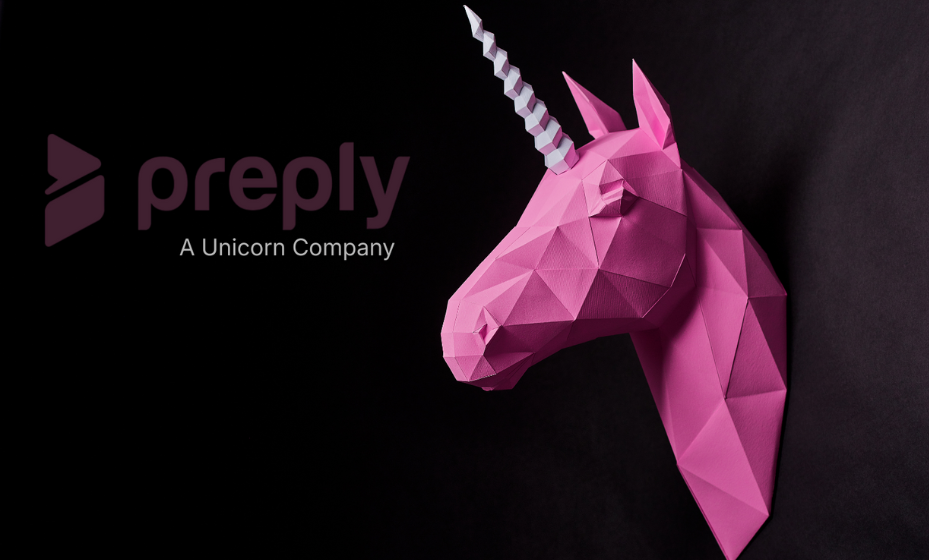
Preply — the language‑learning marketplace co‑founded by Ukrainians — just crossed a defining threshold: a $1.2 billion valuation following a $150 million Series D funding round led by growth equity firm WestCap, joined by Índico Capital Partners and others. That achievement doesn’t just mark financial success — it tells a story of grit, vision, and a very human philosophy of learning.
A Platform Born From Connection
Preply launched in 2012, long before AI became a buzzword and “remote everything” became a way of life. Its simple premise was human: connect motivated learners with expert tutors across the world.
Today, Preply’s marketplace links more than 100,000 tutors with learners in 180 countries, offering personalized lessons in more than 90 languages.
What makes that impressive — beyond sheer scale — is how the company has stayed true to its mission: human‑led learning enhanced (not replaced) by technology.

People First, Then AI
In an era when many edtech platforms rushed to declare themselves AI‑first, Preply took a subtler path.
The company has strategically integrated artificial intelligence into its platform — using it for things like lesson summaries, homework support, and smart tutor matching — but always as a tool to amplify human teaching, not substitute it.
CEO Kirill Bigai summed it up well:
“The future of learning is going to be human‑guided and amplified by AI.”
This philosophy sets Preply apart from competitors like Duolingo, Babbel, and app‑only solutions, which often lean heavily into fully automated learning with minimal human interaction. Duolingo, for example, has courted controversy for its “AI‑first” pivot — but Preply has carved its niche by making humans the core of progress, with AI as an intelligent co‑pilot.
Built Through Uncertainty
Preply’s journey isn’t just remarkable for its business model — it’s remarkable for where it came from.
Although headquartered in the U.S. and registered internationally, the company’s roots trace back to Kyiv, Ukraine. Even amid the ongoing war and frequent Russian strikes, Preply has maintained its Kyiv office and kept approximately 150 employees working there, providing a stable workplace with generators for power and internet during winter outages.
For many, that resilience is not just logistical — it’s cultural.
Bigai reflects on this experience as formative, saying that navigating uncertainty and seeing people help one another made the team more resilient and creative.
In that way, Preply’s rise symbolizes more than corporate success. It embodies a broader story of Ukrainian endurance and innovation in the global tech landscape — joining peers like Grammarly and other Ukrainian‑rooted unicorns.
Unicorn Status and What Comes Next
Reaching unicorn status (a valuation of $1 billion or more) is a milestone few startups achieve. For Preply, this happens at a moment of both profitability and expansion:
- The company has been EBITDA‑positive for over a year, meaning its core operations generate more than they cost.
- It plans to use the new funds to deepen AI and data capabilities, grow product and engineering teams, and accelerate global expansion.
One goal is to enhance the platform’s AI‑supported tutoring assistant — a co‑pilot that helps tutors be more effective and learners more successful. Another is expanding Preply’s reach into regions where language skills are gateways to opportunity or migration.
There’s no announced timeline for an IPO yet, but investor confidence — especially with WestCap’s involvement — suggests that possibility isn’t off the table.
Standing Out Among Competitors
The language‑learning space is crowded. Heavyweights like Duolingo, Rosetta Stone, and Babbel have high brand recognition and app‑centric approaches. Many focus on gamification or algorithmic repetition.
Preply’s differentiation is clear:
- Live human tutors — not bots — at scale
- AI that enhances teaching, not replaces teachers
- Highly personalized lessons tailored to individual goals
- A marketplace spanning dozens of languages and global geographies
This hybrid model — real people backed by real tech — is increasingly seen as the future of learning. And recent efficiency studies suggest learners progress faster with interactive conversation and adaptive AI support than with fully automated systems.
What This Means for the Future of Learning
Preply’s rise is part of a larger narrative: education is becoming global, personalized, and technologically enhanced. Language learning — once dominated by textbooks and classroom walls — now happens one personal conversation at a time anywhere in the world.
And the platform’s global footprint means access isn’t limited by geography, status, or a single dominant language.
Before You Go
Preply’s unicorn status isn’t just about valuation.
It’s about a human philosophy made scalable, a learning experience that refuses to replace people with machines, and a culture that found strength in adversity.
In the story of 21st‑century education, Preply may be remembered not just as a platform — but as one that redefined what learning can feel like in a connected world.
“Preply didn’t just teach languages — it taught the world how resilience sounds in every conversation.“