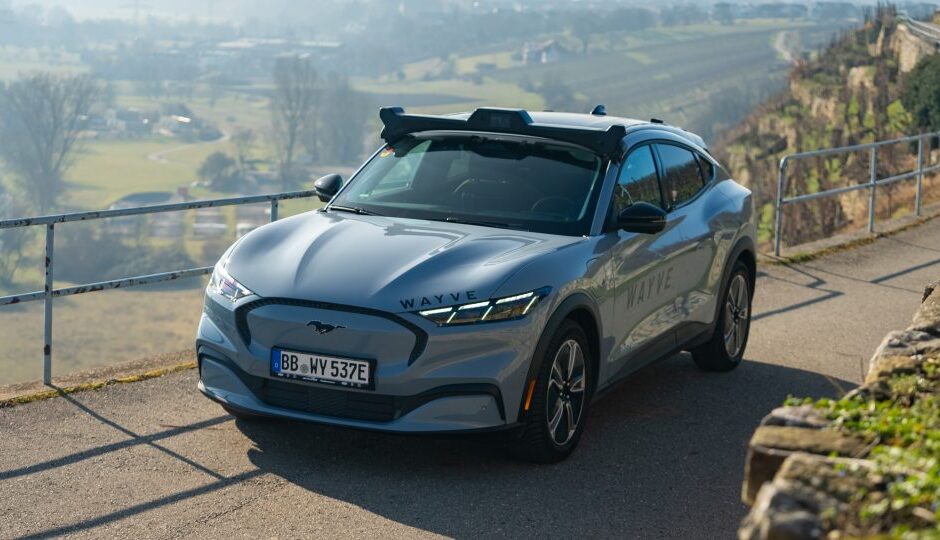

How a London AI startup quietly became one of the most funded and closely watched self-driving companies in the world.
For busy readers
- Wayve has raised over $2.5–$2.8B from global investors including Microsoft, Nvidia, SoftBank, Uber, Mercedes and Nissan.
- Its software-first approach lets any car become autonomous without expensive hardware-heavy systems.
- The company is positioning itself as the AI intelligence layer for future robotaxis and consumer vehicles globally.
A quiet British startup now at the center of the autonomy race
Founded in 2017 by Cambridge researchers Alex Kendall and Amar Shah, Wayve started with a contrarian idea:
teach cars to drive like humans — through experience and learning — instead of rigid coding.
While most autonomous vehicle companies focused on:
- HD maps
- lidar-heavy hardware
- rule-based navigation
Wayve built an AI-first driving system that learns from real-world data and adapts to new environments without being pre-programmed for every city.
This approach has made it one of the most watched autonomous AI companies globally.
Funding: why global giants are betting heavily on Wayve
Wayve has attracted one of the strongest investor rosters in mobility and AI.
Major investors
- Microsoft
- Nvidia
- SoftBank
- Uber
- Mercedes-Benz
- Nissan
- Stellantis
Its latest funding round alone raised about $1.2–$1.5 billion, pushing total funding to roughly $2.5–$2.8 billion and valuation to about $8.6 billion.
Earlier rounds were led by SoftBank with participation from Microsoft and Nvidia, marking one of the largest AI investments in Europe.
Strategic investments from automakers signal something bigger than capital:
they want access to Wayve’s software brain.
What makes Wayve different from Tesla, Waymo and others
Most autonomous companies build either:
- Their own robotaxi fleets
- Or tightly controlled vehicle ecosystems
Wayve is taking a different route:
it wants to be the operating system for autonomy across all cars.
Software-first model
Its AI driver can be embedded into:
- Consumer vehicles
- Fleet vehicles
- Robotaxis
- Logistics and delivery vehicles
The company focuses on adaptable AI that can work across vehicle types and chipsets rather than being locked to one brand or hardware stack.
This gives automakers flexibility — and reduces cost barriers to autonomy.
Less dependence on expensive hardware
Wayve’s system relies heavily on cameras and deep learning rather than expensive lidar systems used by many competitors.
That could dramatically lower costs of deploying self-driving tech at scale.
Commercial rollout: robotaxis and real-world deployment
Wayve is moving from research to commercial deployment.
Key milestones ahead:
- Robotaxi launch in London with Uber
- Expansion to 10+ global cities by 2026
- Integration into Nissan vehicles starting 2027
- Partnerships with Mercedes and Stellantis for future vehicles
Its AI has already been tested across hundreds of cities globally without needing location-specific training.
That adaptability is central to its pitch.
Why investors are backing Wayve so aggressively
Three major reasons:
1. AI-first autonomy is becoming the dominant approach
The industry is shifting from hardware-heavy autonomy to AI-centric systems that can scale faster and cheaper.
Wayve fits perfectly into this transition.
2. Automakers need software partners
Most global carmakers lack deep AI expertise but need autonomous capability.
Instead of building internally, they are partnering with AI specialists like Wayve.
3. Robotaxi economics
Autonomous fleets could become trillion-dollar markets over the next decade.
Owning the AI “driver” layer means owning the most valuable part of that stack.
Challenges ahead
Despite strong funding and partnerships, major hurdles remain:
- Regulatory approvals across countries
- Safety validation at scale
- Competition from Waymo, Tesla, Baidu and Chinese AV firms
- Profitability still years away
Wayve reported significant losses recently as it continues heavy R&D spending.
Like most deep-tech AI companies, it is still in build mode rather than revenue mode.
Future prospects: where Wayve could go next
1. The “AI driver” for every automaker
If successful, Wayve could become the default autonomy software provider for multiple global car brands.
2. Robotaxi infrastructure layer
Its partnerships with Uber suggest a future where Wayve powers autonomous ride-hailing fleets across continents.
3. IPO potential
With valuation nearing $9B and global investor backing, an IPO remains a likely long-term goal once commercial deployments scale.
4. Expansion beyond cars
Its embodied AI approach could extend to:
- Delivery robots
- Logistics vehicles
- Industrial mobility systems
Autonomous driving may be just the first step.
Closing perspective
Wayve represents a new phase in the self-driving race — one where the most valuable asset is not the vehicle, but the intelligence inside it.
If the last decade of autonomy was about hardware and sensors, the next decade will be about AI software platforms.
And Wayve is positioning itself to sit at the center of that shift.
Whether it becomes the “Windows of autonomous driving” or just another well-funded experiment will depend on one thing:
can its AI drive better than humans — everywhere?