
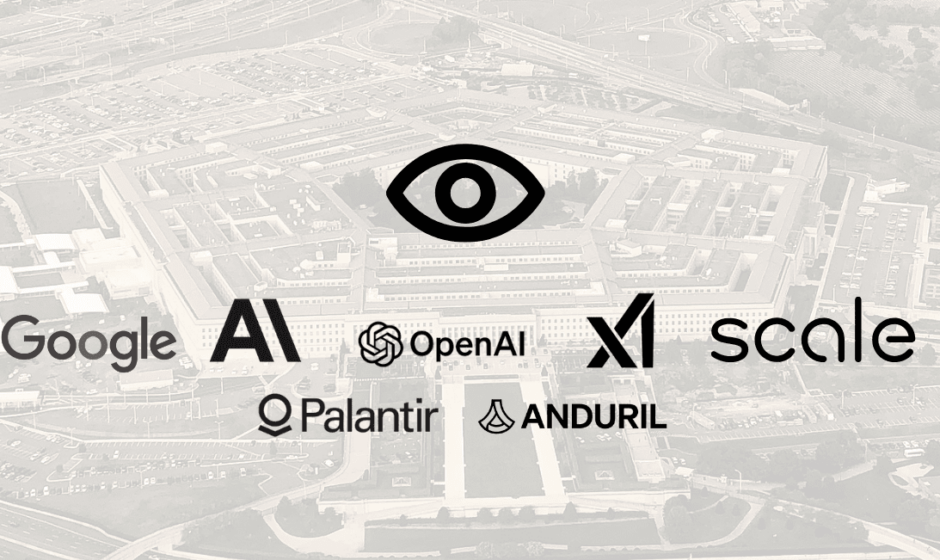

Inside the growing tension between U.S. defence agencies and frontier AI labs over data access, model transparency, and national security control.
For busy readers
- The Pentagon has long pushed for deep technical access to private tech systems under national security frameworks.
- AI companies are increasingly resisting broad disclosure demands around models, training data, and safety architecture.
- The Anthropic–Pentagon friction reflects a bigger battle over who ultimately controls advanced AI infrastructure.
A familiar pattern: defence first, transparency later
For more than a decade, the U.S. Department of Defense has maintained a consistent stance with technology vendors:
if a system touches national security, visibility becomes non-negotiable.
From cloud providers to satellite companies, defence contracts typically include clauses requiring:
- Architecture-level access
- Security audits
- Source or system-level transparency in restricted environments
- Data-sharing under classified frameworks
The logic is straightforward. The Pentagon cannot deploy or depend on systems it cannot inspect or audit.
But that logic begins to break down with modern AI systems.
Unlike traditional software, frontier AI models are not easily “auditable” in conventional ways.
Their behavior emerges from massive training datasets and neural architectures that are often proprietary, sensitive, or commercially guarded.
This is where the current friction sits.
Why AI companies are far more cautious now
Companies like Anthropic operate in a very different technological and regulatory landscape than traditional defence vendors.
Their hesitation to share deep model details stems from several overlapping concerns:
1. Model safety and misuse risks
Full transparency into model architecture, training methods, or safety layers could increase the risk of:
- Model replication by adversaries
- Safety bypass engineering
- Capability exploitation
In frontier AI, disclosure isn’t just a commercial risk — it can become a proliferation risk.
2. Intellectual property protection
Large language models cost billions to train and refine.
Training pipelines, reinforcement learning techniques, and alignment systems are core competitive assets.
Broad disclosure requirements could:
- Expose proprietary techniques
- Reduce competitive advantage
- Create legal exposure across global markets
For venture-backed AI firms, this is not theoretical — it directly impacts valuation and strategic positioning.
3. Global regulatory implications
If detailed information is shared with one government agency, questions immediately arise:
- Will similar access be demanded by other governments?
- Can companies refuse equivalent requests from allies or rivals?
- Does disclosure create precedent under international tech regulation?
AI firms increasingly operate globally, and any deep disclosure to one defence establishment sets expectations elsewhere.
The Pentagon’s long-standing pressure model
The current situation did not emerge overnight.
Historically, the Pentagon has leveraged several mechanisms to obtain deeper access to critical technologies:
- Procurement leverage: Large, multi-year contracts tied to compliance requirements
- Security certification processes: Access tied to clearance approvals
- Export control frameworks: Particularly for dual-use technologies
- Indirect pressure via prime contractors: Especially in aerospace and defence tech ecosystems
Companies that resisted deep cooperation have often found themselves excluded from high-value defence programs or facing extended regulatory scrutiny.
In earlier eras, cloud providers and telecom firms navigated similar tensions.
Some adapted by creating isolated “government cloud” environments with stricter transparency provisions.
AI companies, however, cannot easily segment their core models in the same way.
Why Anthropic is drawing a harder line
Anthropic’s position appears rooted in both technical and philosophical factors.
Alignment-focused architecture
Anthropic has built its brand around AI safety and alignment research.
Sharing certain internal mechanisms — especially around model steering, constitutional AI frameworks, or risk mitigation layers — could undermine its core differentiation.
Commercial neutrality
Maintaining perceived neutrality is critical for enterprise adoption across sectors and geographies.
Over-alignment with a single defence establishment could:
- Complicate international partnerships
- Trigger trust concerns among global customers
- Invite geopolitical scrutiny
Precedent risk
Perhaps the most significant concern is precedent.
If a frontier AI company agrees to broad, ongoing technical disclosure to defence agencies, it effectively establishes a new standard for:
- Model inspection rights
- Government oversight of AI systems
- Access to training and safety frameworks
Once established, such standards rarely remain limited to one agency or country.
Which companies have faced pushback before
While few disputes become public, industry insiders know that companies resisting deep defence integration have historically encountered:
- Delays in federal approvals
- Contract exclusions
- Increased compliance audits
- Strategic pressure via regulatory channels
Several major cloud and satellite firms navigated similar phases in the past decade before eventually reaching structured cooperation models with defence agencies.
The difference now is scale.
Frontier AI may soon sit at the core of intelligence analysis, logistics, cyber defence, and autonomous systems — making access negotiations far more consequential.
The bigger issue: control over foundational AI
At its core, the Anthropic–Pentagon friction is not just about one contract or one company.
It reflects a broader strategic question:
Who ultimately controls the most powerful AI systems — private labs or national governments?
Governments argue that national security requires deep visibility into systems they depend on.
AI companies argue that excessive control risks slowing innovation and centralizing power in ways that could backfire globally.
Both positions carry weight.
Neither side appears ready to concede fully.
Strategic implications for the AI industry
Over the next 24–36 months, expect three major developments:
1. Specialised “defence-aligned” AI models
Companies may build separate versions of models designed specifically for government deployment, with deeper transparency provisions.
2. New regulatory frameworks
The U.S. and allied governments are likely to formalize AI audit and access requirements, similar to past cloud security frameworks.
3. Fragmentation of AI ecosystems
Some firms will align closely with defence establishments.
Others will position themselves as commercially neutral or globally independent.
This split could reshape the competitive landscape of AI infrastructure.
Closing perspective
The relationship between frontier AI labs and defence institutions is entering its most complex phase yet.
For decades, the Pentagon has expected full visibility into technologies it deploys.
For the first time, it is dealing with systems so complex — and so commercially valuable — that even their creators hesitate to fully open the box.
The outcome of this tension will help define not just defence tech policy, but the future structure of the global AI industry.