
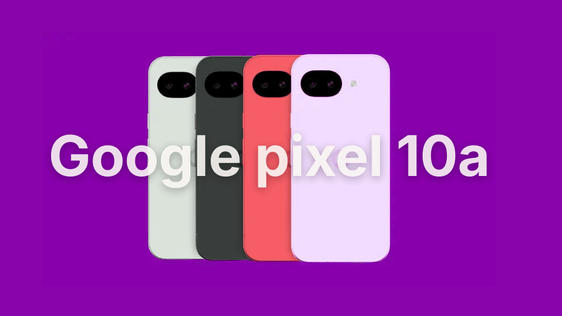

Why Google’s newest mid-range phone is less about hardware and more about long-term ecosystem control
For busy readers
- Pixel 10a launches at ~$499 in the US, ~£499 in the UK, and ₹49,999 in India — keeping Google aggressive in mid-range pricing.
- Hardware upgrades are modest, but AI features, durability, and software longevity are the real story.
- Google’s strategy is clear: build an AI-first smartphone ecosystem where software matters more than specs.
Pixel 10a officially launches: pricing across markets
Google has launched the Pixel 10a globally as its most affordable phone in the Pixel 10 lineup.
Official pricing
- USA: $499 (128GB) / $599 (256GB)
- UK: ~£499 base model
- India: ₹49,999 starting price
This keeps Pixel 10a firmly positioned in the premium mid-range category — competing with Samsung’s Galaxy A series and Apple’s expected affordable iPhone models.
Google has intentionally held pricing steady year-over-year to avoid pushing the A-series out of its value-focused segment.
What’s new in Pixel 10a: features and upgrades
At first glance, Pixel 10a feels familiar.
But the details reveal Google’s direction.
Display and design
- 6.3-inch Actua pOLED display
- 120Hz adaptive refresh rate
- Peak brightness up to 3,000 nits
- Gorilla Glass 7i protection
- Slimmer bezels and flatter camera design
The display brightness upgrade alone pushes it into near-flagship territory for outdoor visibility.
Performance and core hardware
- Google Tensor G4 chip
- 8GB RAM
- 128GB / 256GB storage
- Titan M2 security chip
- Android 16 with 7 years of updates
Interestingly, Google retained last year’s Tensor G4 instead of moving to a newer chip — a decision largely driven by cost optimization and AI stability.
Camera system
- 48MP main camera
- 13MP ultrawide
- 13MP front camera
- 8x Super Res Zoom
- Night Sight and Macro Focus
Google continues to dominate mid-range smartphone photography through software-driven imaging rather than expensive hardware.
AI and software features
New AI features are where Pixel 10a stands out:
- Gemini AI integration
- Camera Coach (real-time photography tips)
- Auto Best Take (AI face correction in group photos)
- Call screening and voice AI tools
- On-device AI processing via Tensor chip
These features reinforce Google’s shift toward AI-first smartphones rather than hardware-first upgrades.
Battery and durability
- 5,100mAh battery (largest in A-series)
- 30W wired charging
- 10W wireless charging
- IP68 water and dust resistance
- Satellite SOS support
Google is clearly positioning durability and longevity as key selling points.
The real strategy behind Pixel 10a
As someone who has watched the Pixel lineup evolve for nearly a decade, the Pixel 10a is less about specs and more about positioning.
1. Google is building an AI-first phone ecosystem
Google doesn’t want Pixel to win purely on hardware.
It wants Pixel to be:
- The default AI smartphone
- The most “Google-native” device
- A hardware gateway into Gemini AI services
By embedding AI deeply into even mid-range phones, Google ensures mass adoption of its AI ecosystem.
2. Holding price steady is intentional
Keeping the Pixel 10a at $499 matters.
Mid-range phones are now the largest global smartphone segment.
Google wants Pixel to be the “default premium budget phone” — especially in:
- US
- India
- UK
- Europe
Aggressive pricing + long software support = long-term user lock-in.
3. Software longevity as a competitive weapon
Seven years of updates is not just a feature.
It’s a strategy.
This directly targets:
- Samsung mid-range users
- iPhone users who keep phones longer
- Enterprise and education buyers
Google is positioning Pixel as the most future-proof Android phone.
4. Hardware stagnation is deliberate
Many analysts and reviewers have noted that Pixel 10a feels similar to the 9a.
That’s not a mistake.
Google is shifting to a model where:
- Hardware evolves slowly
- AI and software evolve rapidly
- Ecosystem drives upgrades
In other words, the phone becomes a delivery platform for Google AI.
Is Pixel 10a worth attention in 2026?
Pixel 10a is not a revolutionary smartphone.
It’s a strategic one.
Google isn’t trying to impress spec hunters.
It’s trying to build the most reliable AI-powered mid-range phone ecosystem globally.
And in that context, the Pixel 10a makes perfect sense.