

For busy readers
- Waymo runs fully autonomous robotaxi services in several U.S. cities and is expanding fast.
- Fares are generally comparable to ride-hailing services, though sometimes slightly higher.
- The company plans to grow to 20+ cities in the U.S. and is eyeing international launches like London by late 2026.
What exactly are Waymo robotaxis?
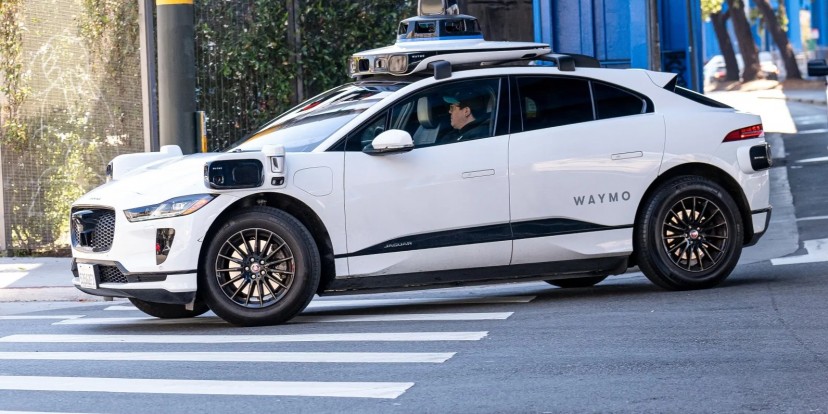
Waymo’s robotaxis are fully autonomous, electric ride-hail vehicles that you can summon from an app — no human driver required. They use advanced sensors, AI, and mapping technology to navigate urban streets, highways, and even complex city environments at scale.
Born out of Google’s self-driving car project nearly two decades ago, Waymo is now a subsidiary of Alphabet focused exclusively on turning what was once laboratory tech into daily transportation for real riders.
Where Waymo robotaxis are already driving
Waymo’s service, often accessed via the Waymo One app or through partner platforms (like Uber in some cities), is live in multiple U.S. markets including:
- Phoenix, Arizona
- San Francisco Bay Area, California
- Los Angeles, California
- Austin, Texas
- Atlanta, Georgia
Recent expansions also include airport service — like the newly launched robotaxi rides to and from San Francisco International Airport (initially at the rental car center, with more terminal access coming soon) — marking a big leap in real-world utility.
Waymo has served over 14 million trips in 2025, a huge jump from previous years, and is on track to surpass 20 million lifetime rides.
How it works — and what it feels like
Once you’re in the service area:
- Open the Waymo One app (or partner app where available).
- Request a ride like any ride-hailing service.
- The autonomous vehicle arrives, you hop in, and it takes you where you’re going — with no one behind the wheel.
The system relies on a suite of sensors and machine learning models that allow the car to:
- Detect pedestrians, cyclists, vehicles, and hazards
- Respond dynamically to road conditions
- Navigate freeways and city streets safely and efficiently
Waymo emphasizes that its robotaxis operate 24/7 and are designed for safety and reliability, reporting far fewer serious crashes compared to human drivers over similar distances.
What a Waymo ride costs
Pricing varies by city and trip, but studies show that robotaxi fares today are roughly comparable to traditional ride-hailing services like Uber or Lyft — sometimes slightly higher (about 30–40 % more on average).
Fares are typically calculated based on time and distance, just like conventional ride-hailing. In some early examples, a short trip might have cost around the same or even a bit less than an equivalent Uber or Lyft ride.
As technology scales and costs drop, analysts believe robotaxi service could ultimately undercut personal car ownership and traditional ride-hailing dramatically — potentially as low as $0.25 per mile in the long run.
How Waymo is changing transportation
? From car ownership to shared rides
Robotaxis make point-to-point travel easier for people who don’t own cars — especially in dense urban areas with limited parking.
? Fewer delays, more predictability
With widespread deployment, wait times and traffic congestion could decrease as fewer private cars circle for parking or clog roads.
? Cleaner cities
Because the fleet is electric, robotaxis contribute less local pollution than gas-powered vehicles, a small but meaningful environmental win.
? Tech and economic impacts
As robotaxis scale, they’re reshaping urban mobility economics, prompting cities to rethink transit planning, curb space, and infrastructure investments.
What’s next — expansion plans
Waymo isn’t stopping at its current footprint. The company aims to:
- Be live in 20+ U.S. markets by the end of 2026, including Dallas, Miami, San Diego, Detroit, Las Vegas, and more.
- Extend service to London by Q4 2026, marking its first major international launch.
- Continue testing and eventual launch in other global cities like Tokyo.
- Ramp up fleet size — thousands of robotaxis — and potentially reach 1 million weekly rides as service scales.
Waymo is also exploring partnerships with car manufacturers and mobility platforms to extend reach and integrate its self-driving tech more broadly.
Why this matters beyond the cool factor
Waymo isn’t just about autonomous cars — it’s about redefining how people move:
- Challenging the decades-old paradigm of car ownership
- Offering reliable, safe, on-demand mobility
- Pushing cities and regulators to adapt to autonomous transport
- Opening the door to a world where your ride comes without a driver, yet with confidence
In a day and age where convenience and technology are inseparable, robotaxis are shaping up as a cornerstone of future urban life.
And lastly,
Robotaxis may not be the norm yet, but with Waymo’s steady expansion and millions of trips under its belt, the future of “hailing a car” could soon mean never seeing a steering wheel again.