
For busy readers
- Elon Musk’s SpaceX is reportedly in discussions to merge with xAI — and possibly Tesla — ahead of its planned IPO, potentially creating a single mega-entity.
- A merger could weave together rockets, satellite internet, AI, social media, and EVs, attracting global investors and redefining tech conglomerates.
- Details are still emerging, and all companies have not officially commented yet — but the market is already reacting.
What’s actually happening
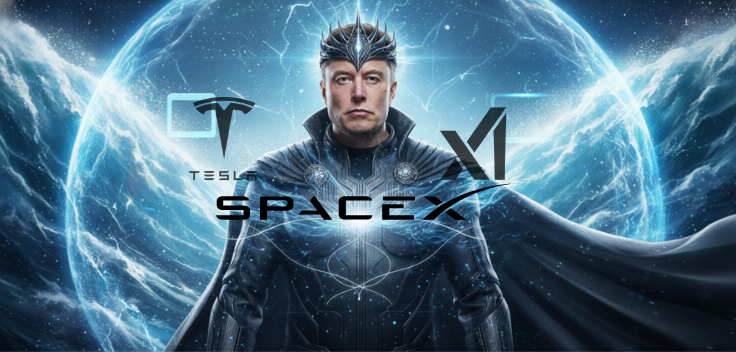
SpaceX, Elon Musk’s space-exploration and satellite-internet powerhouse, is reportedly evaluating two big merger possibilities:
- SpaceX + xAI – merging with Musk’s artificial intelligence firm (which also owns the social platform X and its Grok AI chatbot).
- SpaceX + Tesla – uniting the rocket company with Tesla’s electric vehicles, energy, and robotics endeavors.
These discussions appear to be tied — at least in part — to SpaceX’s planned initial public offering (IPO), which could happen in mid-2026 and is anticipated to be one of the largest IPOs in history.
Neither SpaceX nor Tesla has publicly confirmed a merger plan yet, and insiders warn these talks are preliminary and could change.
Why this matters — in simple terms
Imagine combining:
- SpaceX’s rockets and Starlink satellite network,
- xAI’s artificial intelligence and chatbot technologies (Grok), and
- Tesla’s EVs, energy storage, and robotics.
That’s a merger that spans orbit, earth, vehicles, and AI — all under one roof.
Here’s why investors and analysts are paying attention:
? A mega-IPO vehicle
Merging elements of xAI or Tesla into SpaceX before an IPO could boost the company’s valuation and appeal, potentially raising tens of billions of dollars.
SpaceX is reportedly targeting a valuation of around $1.5 trillion and an IPO that could exceed $50 billion, making it one of the biggest public offerings ever.
? Combining AI and space infrastructure
A SpaceX-xAI merger could seamlessly tie AI systems to satellite networks and space-based data centers, a futuristic idea that Musk has reportedly floated.
AI algorithms could potentially run closer to where data is generated — even from orbit. While still speculative, this kind of integration could redefine distributed computing and communications.
⚡ Tesla synergy — but with risk
A SpaceX-Tesla tie-up could align EVs and energy tech with space power systems and infrastructure logistics — and executives are reportedly discussing whether Tesla’s energy storage systems could support SpaceX’s orbital data center ambitions.
At the same time, Tesla’s recent earnings report showed slower growth and strategic pivots into AI and robotics, which could shift investor focus if SpaceX becomes a more dominant public entity.
What each company brings to the table
SpaceX
- Leader in orbit launches and reusable rocket tech
- Starlink global broadband network
- Huge growth potential and exceptional private valuation (est. ~$800 billion+)
xAI
- AI startup that acquired X and developed the Grok chatbot with multimodal capabilities.
- Has raised billions — including a reported $2 billion investment from SpaceX and Tesla.
Tesla
- EV market leader with energy and robotics ambitions
- Recently pivoting toward autonomous vehicles and AI tied to core products.
Is this a real threat to competitors?
Possibly.
A combined SpaceX-Tesla-xAI entity — or even just SpaceX merged with xAI — would bring together space, AI, and hardware at an unmatched scale. That could be compelling if Musk’s vision of orbital data centers and AI infrastructure climaxes into tangible products and revenue streams.
Competitors in these spaces include:
- AI giants like Google, OpenAI, and Meta — who are also pushing AI and computing integration.
- Automakers and robotics firms like Toyota, GM, and Boston Dynamics — now racing into EVs and automation.
- Telecom and cloud players such as Amazon, Microsoft, and SpaceX rival satellite ventures.
A mega-entity combining space infrastructure with AI and transport could upset traditional sector boundaries and force rivals to rethink strategy.
The challenges — it’s not all smooth sailing
While the idea captures headlines, there are several hurdles:
- Regulatory scrutiny — mega-mergers attracting attention from global regulators.
- Operational complexity — combining organizations as different as SpaceX and Tesla involves blending cultures and priorities.
- Shareholder approval — especially critical for public entities like Tesla.
And even if discussions are active, insiders caution that no official deal terms have been finalized — meaning the merger could still fall apart or morph into something smaller.
What comes next
SpaceX’s planned IPO remains the big milestone in play for 2026, and any merger decisions would likely be tied to timing that maximizes valuation and strategic advantage.
Musk’s history of bold moves — from the Twitter/X acquisition to pushing AI into Tesla products — shows he’s willing to blur lines between sectors. Whether this consolidation becomes reality, however, will be a defining story of the tech era.
Let’s just say,
If Musk’s companies fly into each other as they have launched into orbit, investors and the tech world won’t just be watching history — they’ll be trying to figure out what he’s building next.