
For busy readers
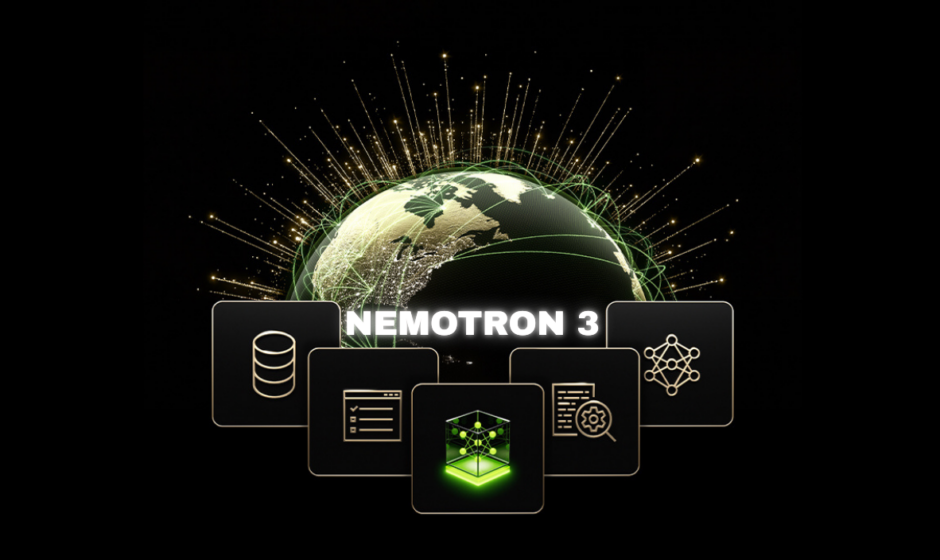
- Nemotron-3 is NVIDIA’s enterprise-focused large language model family
- Adoption has grown steadily inside companies, not consumer apps
- Its real value lies in customization, reliability, and integration — not hype
The launch that didn’t try to steal the spotlight
When Nemotron-3 entered the scene, it felt… restrained.
No flashy app.
No viral threads.
No promises of replacing human creativity overnight.
Instead, NVIDIA positioned Nemotron-3 as something more deliberate: a foundation model built for enterprises, designed to be adapted, fine-tuned, and embedded into real workflows.
That meant its success wouldn’t be measured in downloads — but in deployments.
What Nemotron-3 actually is (and why that matters)
Nemotron-3 isn’t a single model. It’s a family of large language models, optimized for:
- Instruction following
- Reasoning-heavy tasks
- Enterprise-grade reliability
Unlike consumer LLMs optimized for conversation, Nemotron-3 was built to:
- Sit inside tools
- Power internal systems
- Answer domain-specific questions
- Follow rules without improvising
In short: it was built to work, not perform.
The quiet adoption phase
In the weeks after launch, something predictable happened.
Nemotron-3 didn’t trend.
But it started appearing inside companies.
Not on app stores — but in:
- Internal copilots
- Knowledge assistants
- Support automation
- Compliance tools
This is the phase most AI products never survive — the moment when novelty fades and usefulness is tested.
Nemotron-3 passed that test quietly.
Where Nemotron-3 is being used today
? Enterprise knowledge systems
Large organizations are using Nemotron-3 to:
- Query internal documentation
- Summarize policies and procedures
- Assist employees without exposing data externally
Because Nemotron-3 can be deployed in controlled environments, it fits industries where data sensitivity matters.
? Customer support & operations
Companies have embedded Nemotron-3 into:
- Support triage systems
- Ticket classification
- First-line response generation
Its strength here isn’t creativity — it’s consistency. The model follows instructions, respects boundaries, and doesn’t hallucinate as freely as consumer-facing models.
? Engineering & technical workflows
Nemotron-3 is also showing up in:
- Code documentation assistants
- API explanation tools
- Debugging copilots
Engineers aren’t asking it to invent. They’re asking it to explain, summarize, and reason — and that’s where it shines.
? Regulated industries
Financial services, healthcare, and industrial enterprises are exploring Nemotron-3 because:
- It supports private deployment
- It aligns well with audit requirements
- It integrates cleanly with NVIDIA’s broader AI stack
In regulated spaces, “good enough and predictable” beats “impressive but risky.”
Why NVIDIA’s approach feels different
NVIDIA didn’t sell Nemotron-3 as the AI.
It sold it as part of a system.
Nemotron-3 fits into:
- NVIDIA NeMo
- Enterprise AI pipelines
- GPU-accelerated inference
- Existing IT and ML workflows
That’s intentional. NVIDIA understands something many AI companies forget:
Most AI value is created after the demo.
How Nemotron-3 competes without competing
Nemotron-3 isn’t trying to out-chat GPT-style models.
Instead, it competes on:
- Customization
- Control
- Cost predictability
- Deployment flexibility
For enterprises choosing between:
- A black-box API
- Or a tunable, deployable model
Nemotron-3 often becomes the safer bet.
The bigger lesson from Nemotron-3
Two months on, Nemotron-3 tells us something important about where AI is headed.
The next wave of AI winners won’t be:
- The loudest
- The most viral
- Or the most anthropomorphic
They’ll be the models that:
- Integrate quietly
- Reduce friction
- Earn trust over time
Nemotron-3 didn’t explode onto the scene.
It settled into it.
Strategic insight
If consumer AI is about attention, enterprise AI is about adoption.
Nemotron-3 sits firmly in the second camp — and that may give it a longer, quieter, and ultimately more valuable life than many flashier launches.
and to summarize it.
Some AI models chase the future.
Others become part of the present — quietly doing the work that makes everything else possible.