

For busy readers
- Fauna robotics takes inspiration from animals and natural systems to design safer, adaptive robots
- These robots focus on coexistence—movement, perception, and behavior tuned for human spaces
- The real breakthrough isn’t hardware, but how robots sense, decide, and react socially
The big idea: Robots that behave, not just function
Traditional robotics was built for controlled environments—factory floors, warehouses, labs. Everything was predictable. Humans stayed out of the way.
Fauna robotics flips that assumption.
Instead of forcing the world to adapt to machines, fauna-inspired robots are designed to adapt to the world—especially environments shared with humans: hospitals, homes, farms, offices, streets.
The inspiration comes from biology. Animals have evolved over millions of years to navigate complex, unpredictable ecosystems without causing chaos. Fauna robotics borrows those principles and translates them into code, sensors, and motion.
What exactly is fauna robotics?
Fauna robotics is a design and engineering approach where robots are modeled after animal behavior rather than industrial mechanics.
This doesn’t mean robots that look like animals (though some do). It means robots that move, sense, and decide the way animals do:
- Flexible movement instead of rigid joints
- Continuous perception instead of binary sensing
- Context-aware reactions instead of pre-programmed commands
Think less “machine following instructions” and more “organism responding to its surroundings.”
How they actually work in human environments
1. Perception comes first
Fauna robots rely heavily on multi-sensory input—vision, sound, proximity, force, sometimes even environmental cues like airflow or vibration.
Instead of asking “What is this object?” they ask:
- Is this moving?
- Is it approaching?
- Is it predictable or erratic?
This mirrors how animals assess humans—not by exact identification, but by intent and behavior.
2. Movement is soft, adaptive, and readable
In human spaces, movement matters as much as intelligence.
Fauna robots are designed to:
- Slow down near humans
- Change posture to signal intent
- Take curved, natural paths instead of sharp mechanical turns
This makes them easier for humans to read, reducing fear and unpredictability. A robot that moves like a cautious animal feels safer than one that moves like a forklift with opinions.
3. Decision-making is probabilistic, not rigid
Rather than fixed rules, fauna robotics often uses probabilistic models and reinforcement learning.
The robot constantly evaluates:
- What is likely to happen next?
- What’s the least disruptive action?
- How do I achieve my goal without startling anyone?
This allows robots to coexist—pausing, yielding space, or rerouting when human behavior changes suddenly.
4. Social awareness without social pretending
These robots don’t try to act human. That’s intentional.
Instead, they aim for social compatibility, not imitation:
- Maintaining personal space
- Avoiding sudden movements
- Respecting shared pathways
It’s closer to how pets navigate a living room than how humans do—and that’s exactly why it works.
Where fauna robotics is already showing up
- Healthcare: Robots that assist nurses without obstructing patients or equipment
- Elder care: Companion or utility robots that adapt to daily routines
- Agriculture: Field robots that move among humans, animals, and crops safely
- Urban services: Delivery and inspection robots navigating sidewalks and public areas
In all these cases, success isn’t measured by speed or strength—but by how invisible the robot feels.
Why this matters more than humanoid robots
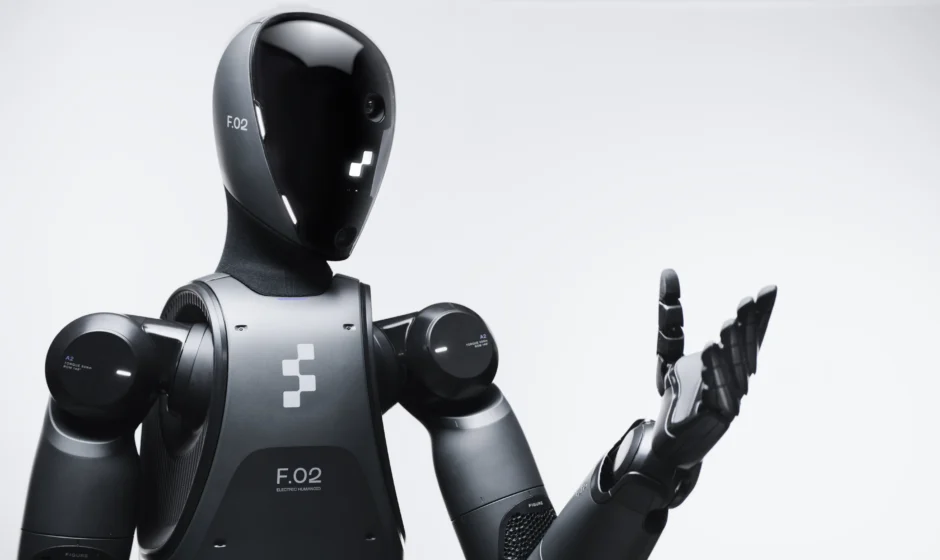
Humanoid robots grab attention. Fauna robots earn trust.
Human environments are messy, emotional, and unpredictable. Fauna robotics accepts that chaos instead of fighting it. By borrowing nature’s design principles, these systems scale more safely and more realistically than rigid, human-shaped machines.
It’s a quiet shift—but a foundational one.
The strategic insight
The future of robotics isn’t about making robots more human.
It’s about making them better neighbors.
The teams winning in this space aren’t just mechanical engineers—they’re blending biology, behavioral science, AI, and design psychology.
Nature solved coexistence long before software tried.
And before you go,
The smartest robots won’t announce themselves.
They’ll just move aside when you walk past—like they were always meant to be there.