


Cloud computing has changed the way businesses run — making it easier to scale fast, go global, and launch services on demand. But even the cloud isn’t immune to failure.
Over the years, major cloud outages have revealed cracks in systems we often assume are bulletproof. These incidents have led to massive revenue losses, disrupted millions of users, and forced the industry to rethink how reliability and resilience are built.
In this article, we look at the biggest cloud outages — what caused them, how companies recovered, what they cost businesses and customers, and the lessons shaping how cloud infrastructure is designed today and in the future.
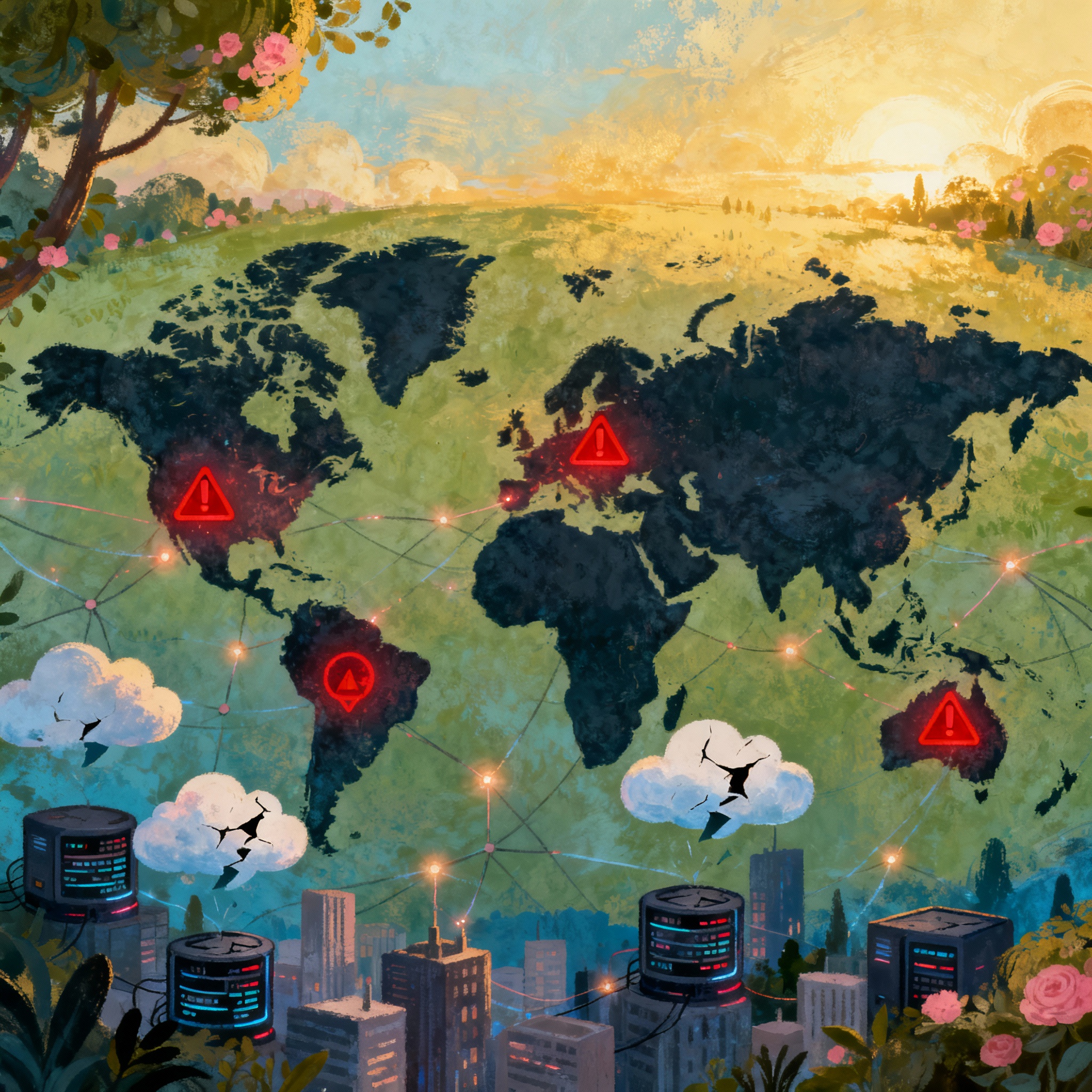
1. AWS Outage — October 2025
?Date: October 20, 2025
?Provider: Amazon Web Services
?Impact: Millions affected worldwide; thousands of websites and apps including Snapchat, Reddit, Slack, Zoom, Venmo, and Salesforce-hosted services went down.
What Happened
The outage was traced to DNS resolution failures and internal load balancer degradation in AWS’s busiest region, US-EAST-1 — the heart of much global traffic.
Impact
- Over 4 million user reports of disruption from independent outage tracker Downdetector.
- Websites, apps, payment systems, and airline booking systems temporarily unresponsive.
- Global supply chains, e-commerce, and enterprise services experienced cascading failures.
Recovery
AWS engineers worked region by region to restore services, and the cloud status page confirmed resolution after ~15 hours.
Lessons Learned
- Heavy reliance on single regions is risky — multi-region and multi-cloud strategies are essential for critical systems.
- DNS can be a hidden single point of failure; providers and customers alike must manage DNS resilience independently too.
2. Microsoft Azure Global Outage — October 29, 2025
? Date: October 29, 2025
? Provider: Microsoft Azure
? Duration: ~8+ hours
? Services impacted: Azure Comm & Media Services, productivity tools, airline and telecom systems.
What Happened
A configuration change affecting Azure Front Door, Azure’s global content delivery and edge networking layer, prevented connections across multiple regions.
Impact
Airlines (like Alaska Airlines), airports (Heathrow), telecom providers (Vodafone), and enterprise services saw significant disruption.
Recovery
Microsoft reverted problematic configs and brought systems back online, though some customers reported lingering issues.
Lessons Learned
- Even edge-network features can become single points of failure without isolation layers.
- Transparent incident reporting and rollbacks are vital for customer trust.
3. Google Cloud Outage — June 12, 2025
? Date: June 12, 2025
? Provider: Google Cloud
? Impact: Spotify, Discord, and other services experienced disruptions globally.
What Happened
Google Cloud confirmed a service incident that impacted cloud connectivity and APIs, though details on root causes were limited in public reporting.
Impact
Tens of thousands of users saw service interruptions, illustrating that even highly resilient architectures can fail under unexpected stress.
Lessons Learned
- Systems must be defendable and observable even when internal tools and logs are impaired.
- Failover mechanisms should be validated across all client surface areas — not just internal dashboards.
4. Cloudflare Outage — November 18, 2025
? Date: November 18, 2025
? Provider: Cloudflare
? Impact: X, ChatGPT, Uber, and other cloud apps temporarily disrupted.
What Happened
Cloudflare saw an internal service degradation event that propagated to many dependent services worldwide.
Recovery
Engineering teams implemented fixes early in the morning and monitored for stability, restoring global service within hours.
Lessons Learned
- Shared infrastructure layers (like CDN/caching and DDoS mitigation) can create systemic dependencies.
- Transparent communication with downstream service operators helps reduce wasted time during cascading outages.
5. AWS S3 Outage — February 2017 (Historic)
? Date: February 2017
? Provider: AWS
? Impact: Massive disruption to many internet services (Slack, Trello, Quora).
What Happened
A routine maintenance task accidentally deleted critical servers beyond the intended scope, taking down storage services that many dependent systems relied on.
Lessons Learned (Historic but Timeless)
- Mistakes in routine ops can ripple catastrophically if boundaries aren’t strictly enforced at scale.
- Cloud providers today adopt stronger safeguards, automated change-validation gates, and sandboxed test environments for mission-critical updates.
Other Notable Incidents (Context)
CrowdStrike Update Outage — July 19, 2024
While not strictly a cloud provider outage, a misconfigured global software update from CrowdStrike caused millions of Windows machines to crash, disrupting airlines, hospitals, and banking systems worldwide — a stark reminder that downstream dependency failures count too.
The Business Cost of Cloud Downtime
Cloud outages aren’t just technical blips — they cost money:
? Global downtime costs average $14,056 per minute in 2024, with large enterprises seeing even higher losses.
For many companies, a few hours of cloud outage means:
- Revenue loss from halted transactions
- Customer churn (frustration and trust erosion)
- Operational slowdowns or shift to manual processes
- Stock price volatility tied to perceived reliability
The cascade effect of provider downtime often means that secondary services and SaaS applications fail even if their own infrastructure is healthy — simply because their hosting layer is lagging or unavailable.
Lessons That Have Shaped the Cloud Industry
From these failures, the cloud industry has learned and evolved significantly:
1. Redundancy Isn’t Optional
Enterprises now:
- Design for multi-region failover
- Use multi-cloud strategies
- Avoid single points of failure in DNS, load balancers, and global networking.
2. Resilience Is Engineered, Not Bought
Systems must handle:
- Partial failures without full collapse
- Cross-provider failover
- Independent monitoring (not just provider status pages)
- Decentralized DNS and health checks
DNS posture management and independent traffic steering have become best practices in avoiding silent failures.
3. Real-Time A/B Testing and Chaos Engineering
Major providers now use chaos engineering tools internally to proactively trigger failure scenarios and validate response automation — turning outages into learned behavior.
4. Observability and Alerting
Full-stack observability (logs, metrics, traces) ensures that an issue isn’t only visible after it becomes customer visible.
5. Cloud Abstraction and Portable Deployments
Organizations increasingly adopt portable orchestration tools like Kubernetes, Terraform, serverless functions tied to portability rather than proprietary lock-ins to minimize provider-specific risk.
What the Future Holds
Looking forward, the cloud industry is prioritizing:
✅ Cross-cloud resilience frameworks
✅ AI-driven outage prediction and automatic healing
✅ Increased SLA transparency and financial remedies
✅ Federated DNS and traffic control outside provider ecosystems
✅ Immutable infrastructure with rapid rollback and auto-remediation
Cloud outages aren’t going away. But modern systems are far more resilient than they were a decade ago. Each major failure pushes providers and customers to improve architecture, safeguards, and recovery processes. The goal isn’t to eliminate failure—it’s to build systems that expect it, absorb the impact, and recover gracefully.
“Good systems fail. Great systems recover.“