
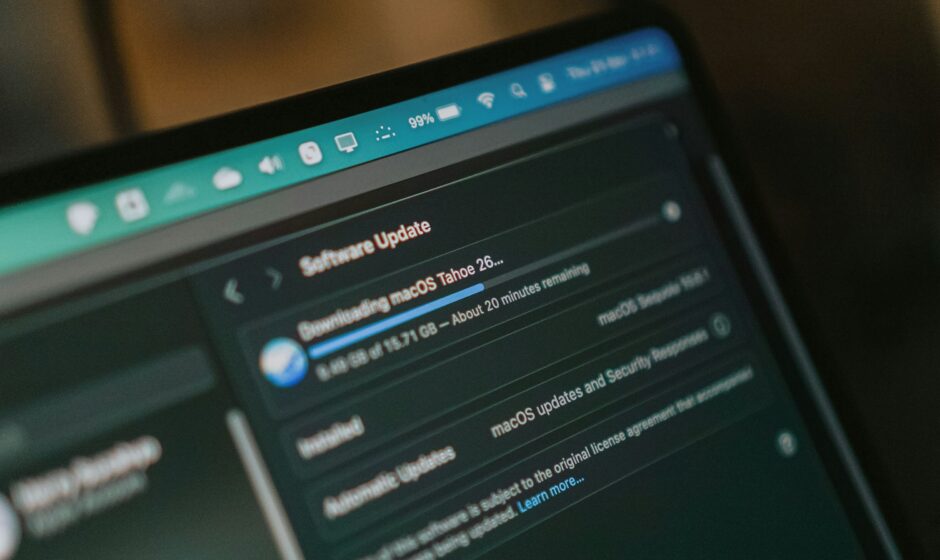

A deep, technical walk through what actually happens behind the scenes
When you tap “Update now”, you’re not just downloading a file.
You’re stepping into one of the most carefully engineered systems in modern computing — designed to change software on millions of devices without breaking the world.
This article explains exactly how that happens.
Updates Are Never “One Big Push”
No serious company ships an update to everyone at once.
Not Apple.
Not Google.
Not Microsoft, Netflix, or AWS.
Why?
Because at global scale, certainty doesn’t exist — only probabilities.
Every update is treated as a controlled experiment.
The Update Pipeline (High-Level View)
Before any user sees an update, it passes through layers:
- Build & artifact generation
- Internal testing
- Staged rollout
- Live monitoring
- Automatic rollback (if needed)
Each stage exists to answer one question:
“Can this safely reach the next group?”
Step One: Immutable Builds
Once code is approved:
- A single build artifact is created
- It is cryptographically signed
- It is never modified again
This prevents:
- Partial corruption
- Version drift
- “Works on my machine” disasters
If a change is needed, a new build is created — not patched.
This immutability is foundational.
Step Two: Internal & Shadow Testing
Before public release:
- Employees receive the update (dogfooding)
- The update may run in shadow mode
- Outputs are compared with the current production version
Shadow mode means:
- New logic runs silently
- Old logic still controls behavior
- Differences are logged, not shown
This catches failures without users ever knowing.
Step Three: Canary Deployments (The First Real Users)
Now comes the critical phase.
The update is released to:
- 0.1%
- Then 0.5%
- Then 1%
- Then 5%
These users are called canaries — a term borrowed from coal mining.
What’s monitored:
- Crash rates
- CPU & memory usage
- Network failures
- Latency spikes
- Error patterns never seen before
If any metric deviates, rollout stops automatically.
No meetings.
No debates.
Just math.
Now, Why CDNs Matter More Than You Think
Updates don’t come from one server.
They’re delivered through Content Delivery Networks (CDNs):
- Files are cached near users
- Load is distributed geographically
- Failures stay localized
This prevents:
- Global outages
- Network congestion
- Server overload during mass updates
Without CDNs, “Update Day” would crash the internet.
Progressive Rollouts by Region & Device
Updates are segmented by:
- Geography
- Device model
- OS version
- Hardware capability
Why?
Because:
- A bug may only affect older CPUs
- A driver issue may exist in one region
- Network conditions vary globally
This isolation ensures failures stay small and reversible.
Real-Time Telemetry: The Nervous System
Every updated device sends back telemetry:
- Success/failure signals
- Performance metrics
- Error traces (anonymized)
Modern systems detect:
- Pattern anomalies
- Correlated failures
- Slow-burning bugs that appear hours later
This is not logging.
This is continuous diagnosis.
The Most Important Feature: Rollback
Every safe update system assumes failure is inevitable.
So rollback is:
- Automated
- Fast
- Often invisible to users
Rollback methods include:
- Version pinning
- Feature flag disabling
- Blue-green environment switching
In many cases, users never know an update briefly failed.
Feature Flags: Shipping Code That Does Nothing
One of the most misunderstood techniques.
Companies ship:
- Disabled code paths
- Dormant features
- Experimental logic
These are controlled by feature flags, not updates.
Benefits:
- Instant enable/disable
- No redeployment
- No app store delays
This decouples deployment from activation.
Why App Store Updates Take Time
You must have noticed when updates go through:
- Apple App Store
- Google Play
So, There’s an added layer:
- Review pipelines
- Integrity checks
- Gradual availability
This isn’t bureaucracy.
It’s risk containment at planetary scale.
What Happens When Things Still Go Wrong
Despite all this, Sometimes failures happen.
When they do:
- Rollouts halt globally
- Rollbacks trigger automatically
- Engineers analyze root cause
- Fixes are tested in isolation
- A new rollout begins
No hotfixes.
No panic pushes.
Only controlled recovery.
The Real Reason Updates Feel “Boring”
A safe update is an invisible update.
No drama.
No excitement.
No surprises.
If you never think about how an update reached you —
the system worked exactly as intended.
The bigger picture that’s not to be missed.
Shipping software to millions isn’t about speed.
It’s about respecting uncertainty at scale.
And the safest updates are the ones you never notice —
because thousands of systems argued, tested, and failed quietly… so you wouldn’t have to.
and finally,
“If your update finished quietly, congratulations—thousands of servers just had a very stressful day so you wouldn’t. “